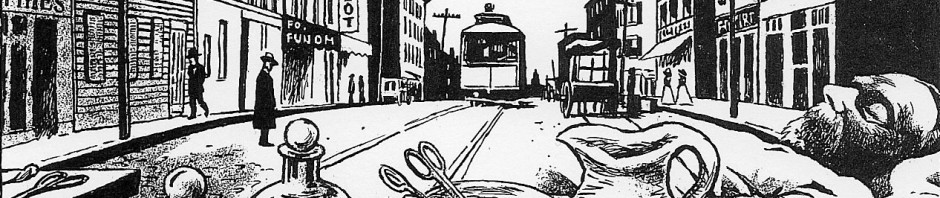
 In an effort to imitate the great early twentieth-century wood engravings by such artists as Lynd Ward, but without having to figure out how to do actual wood engravings, I thought I would try my hand at drawing on black “scratch board” paper. I went out to buy some at the art supply store today, and I was so excited that I spent the remaining half hour of my break from work sitting on a park bench drawing this weird seascape off the top of my head. I was going for something à la Claude Lorrain, but it ended up looking more like the kind of chintzy fantasy art one sometimes sees being created by street performers. Still, it’s a really interesting and fun medium, and I look forward to experimenting with it further!






-
-
Recent Posts
Archives
- October 2026
- September 2026
- June 2026
- May 2026
- April 2026
- March 2026
- December 2025
- August 2025
- June 2025
- May 2025
- April 2025
- February 2025
- October 2024
- September 2024
- August 2024
- July 2024
- June 2024
- May 2024
- April 2024
- February 2024
- December 2023
- October 2023
- August 2023
- July 2023
- June 2023
- March 2023
- February 2023
- January 2023
- December 2022
- November 2022
- September 2022
- March 2022
- February 2022
- January 2022
- December 2021
- October 2021
- September 2021
- July 2021
- June 2021
- May 2021
- April 2021
- March 2021
- February 2021
- January 2021
- December 2020
- November 2020
- October 2020
- September 2020
- August 2020
- July 2020
- June 2020
- May 2020
- April 2020
- March 2020
- February 2020
- January 2020
- December 2019
- November 2019
- September 2019
- August 2019
- June 2019
- May 2019
- March 2019
- February 2019
- December 2018
- November 2018
- October 2018
- September 2018
- August 2018
- July 2018
- June 2018
- May 2018
- March 2018
- February 2018
- December 2017
- November 2017
- October 2017
- September 2017
- August 2017
- July 2017
- June 2017
- May 2017
- April 2017
- March 2017
- February 2017
- January 2017
- December 2016
- November 2016
- September 2016
- August 2016
- July 2016
- May 2016
- April 2016
- March 2016
- February 2016
- January 2016
- December 2015
- November 2015
- October 2015
- September 2015
- August 2015
- July 2015
- June 2015
- May 2015
- April 2015
- March 2015
- February 2015
- January 2015
- December 2014
- November 2014
- October 2014
- September 2014
- August 2014
- June 2014
- May 2014
- March 2014
- February 2014
- January 2014
- December 2013
- November 2013
- October 2013
- September 2013
- August 2013
- May 2013
- April 2013
- March 2013
- February 2013
- January 2013
- December 2012
- November 2012
- October 2012
- September 2012
- August 2012
- May 2012
- April 2012
- March 2012
- February 2012
- September 2011
- August 2011
- June 2011
- May 2011
- April 2011
- November 2010
Comics
“The Love Song of J. Alfred Prufrock” by T.S. Eliot

