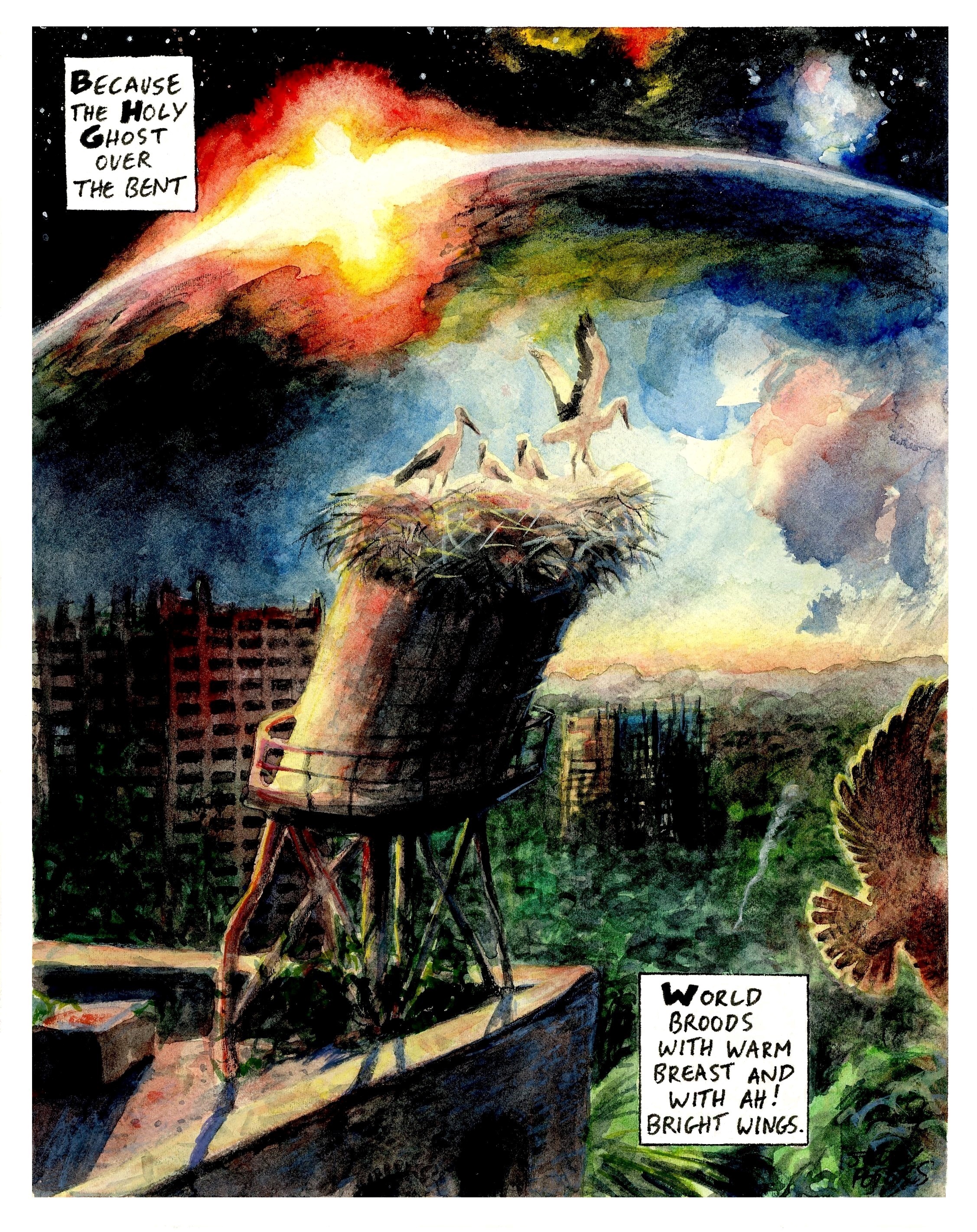
Every week on this site, I will be publishing a new page from my ongoing comics adaptation of “The Burial of the Dead,” the first section of T. S. Eliot’s iconic poem “The Waste Land.”

Next week: On in sunlight!
Every week on this site, I will be publishing a new page from my ongoing comics adaptation of “The Burial of the Dead,” the first section of T. S. Eliot’s iconic poem “The Waste Land.”
Next week: On in sunlight!
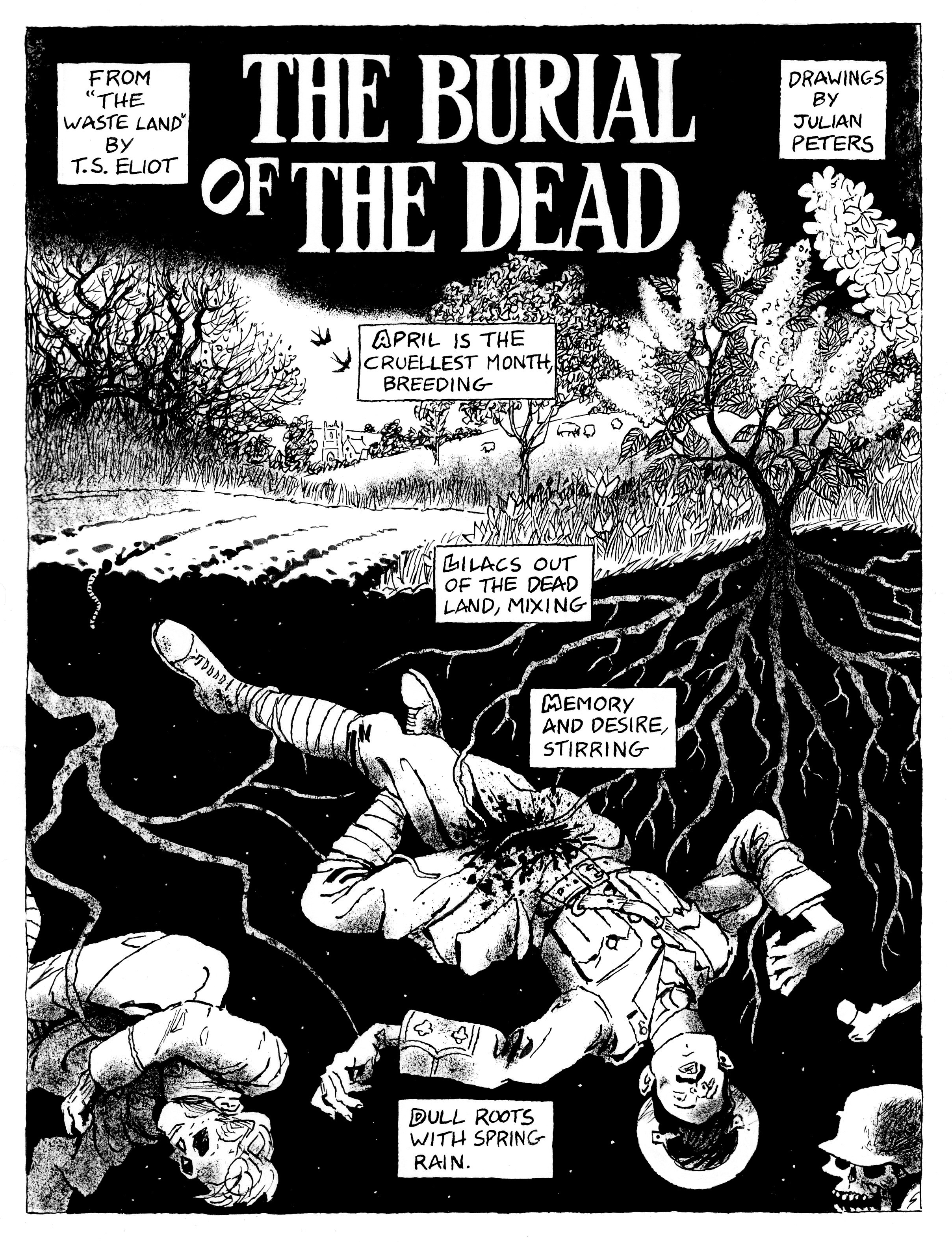
Ever since completing my comics adaptation of T. S. Eliot’s “The Love Song of J. Alfred Prufrock,” I have wanted to do something similar with Eliot’s most famous and celebrated poem, “The Waste Land.” But besides being extremely complex and often difficult to interpret,”The Waste Land” (First published 1922) is very long, and this always deterred me from getting started. But in recent times, with a historical situation that in many ways mirrors that in which Eliot was writing, with a society emerging from a vast global collective trauma–made up of innumerable individual personal traumas–and a disquieting future looming on the horizon, this latent desire pressingly reasserted itself.
Finally it occurred to me that I could after all begin to tackle the project by breaking it down into smaller, more manageable units. Near the end of last year I resolved to adapt, for the time being, only the first section of the five sections into which the poem is subdivided, “The Burial of the Dead.” Today I am posting the first page from this work in progress. Every week for the next sixteen weeks, I am hoping to continue to publish a new page from the planned 16-page comic.
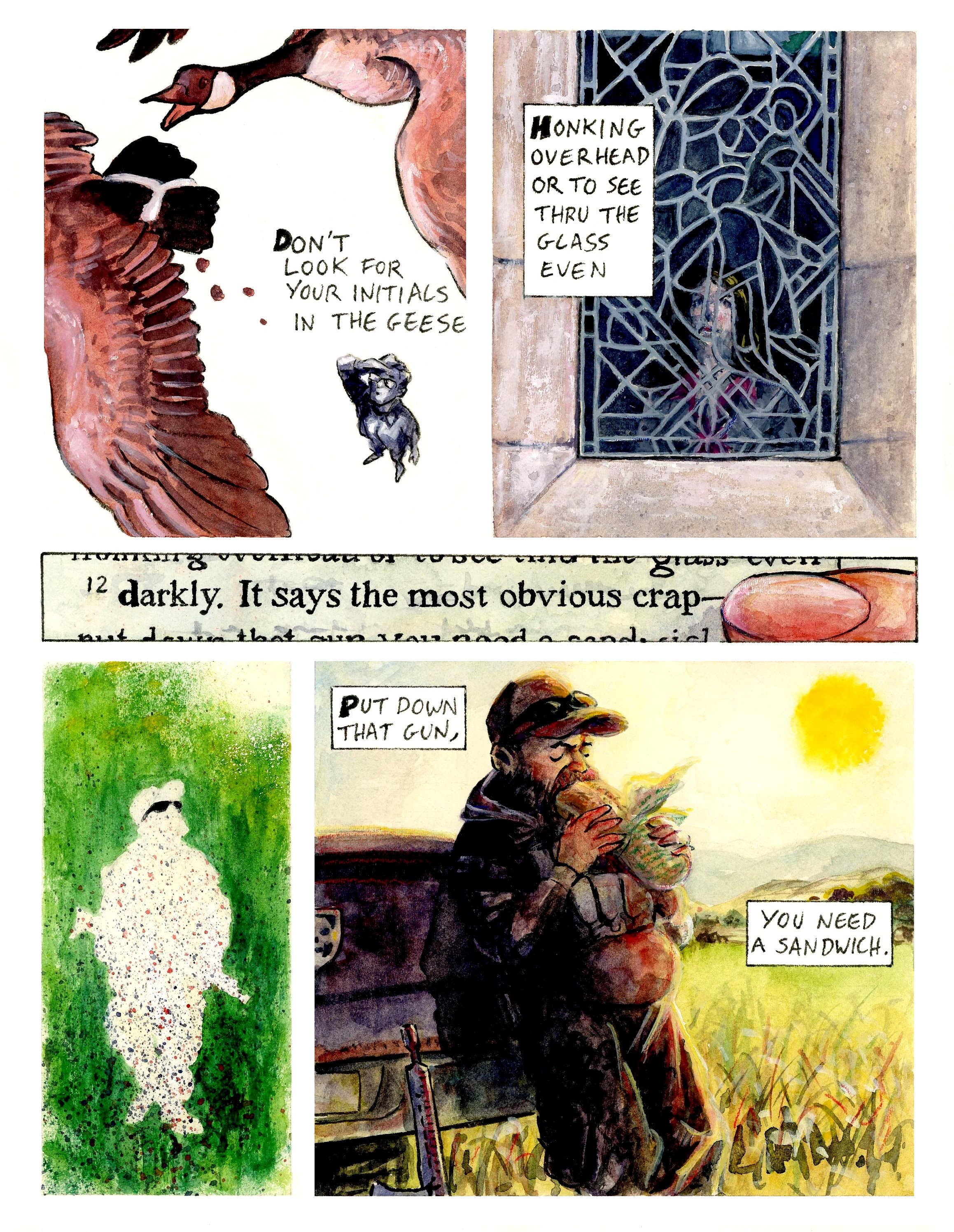
Next week: Summer surprises us!
My graphic interpretation of the poem “The Voice of God” by the American poet and author Mary Karr. This comic was originally commissioned by the Jesuit Conference of Canada and the United States with the permission of the poet.


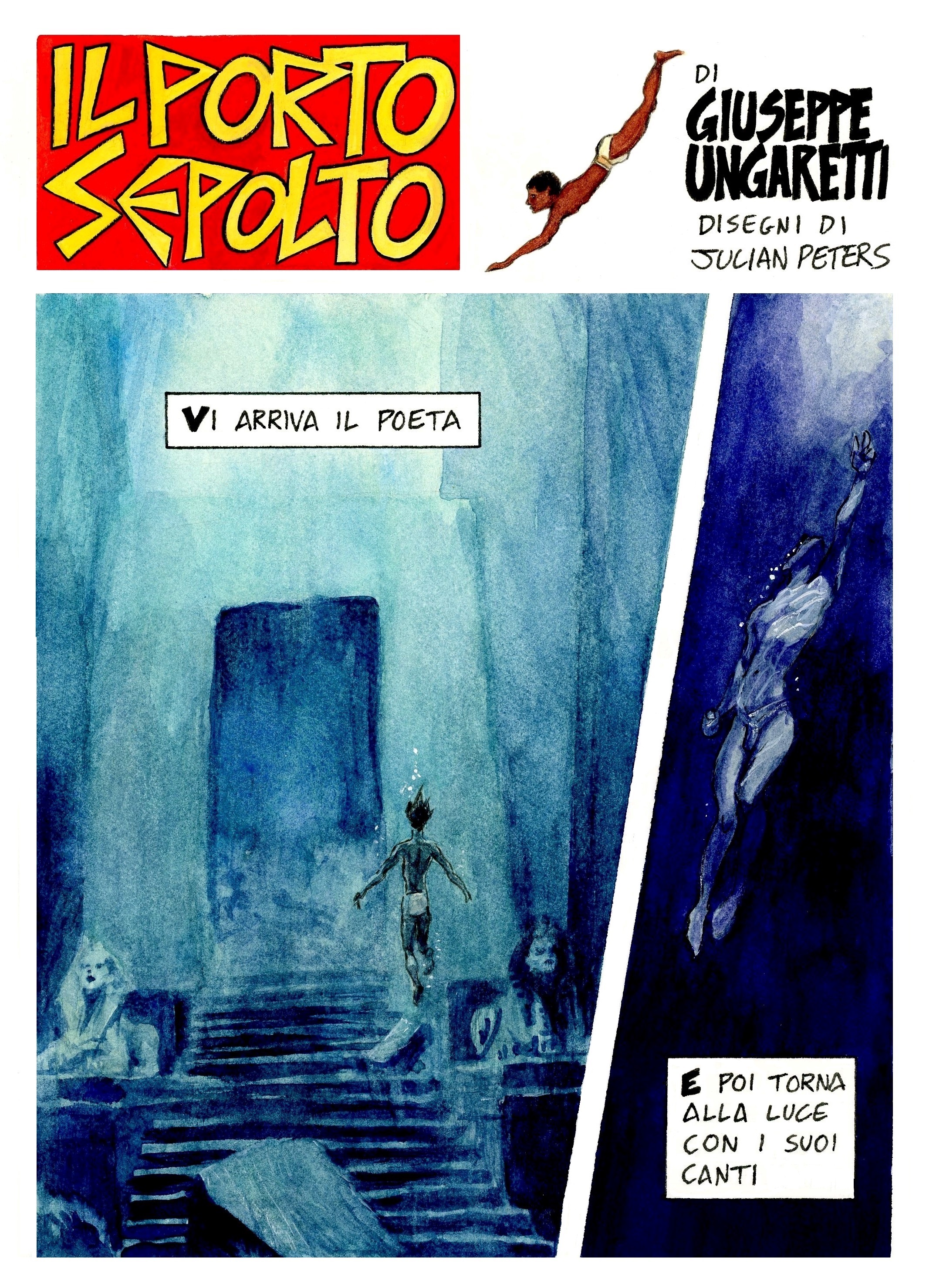
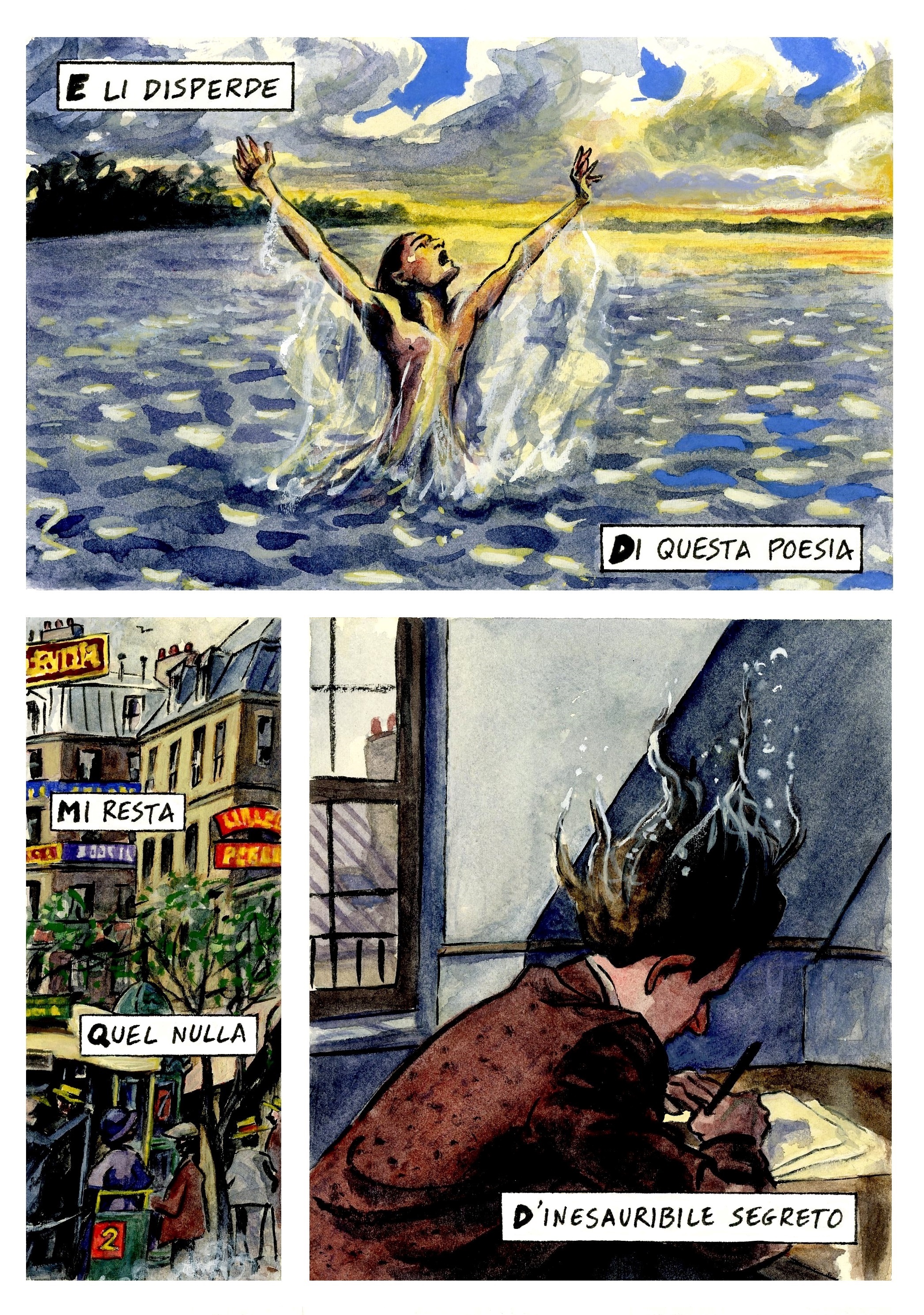
My graphic interpretation of the 1916 poem “Il porto sepolto” (“The Buried Port”) by the great Italian poet Giuseppe Ungaretti (1888-1970). This comic originally appeared in the third issue of “Junior Poetry Magazine,” an Italian magazine of poetry for young people.
La mia “fumettizzazione” della poesia “Il porto sepolto” (1916) di Giuseppe Ungaretti. Questo fumetto è stato pubblicato per la prima volta nel terzo numero di “Junior Poetry Magazine,” la prima rivista di poesia per ragazzi in Italia.

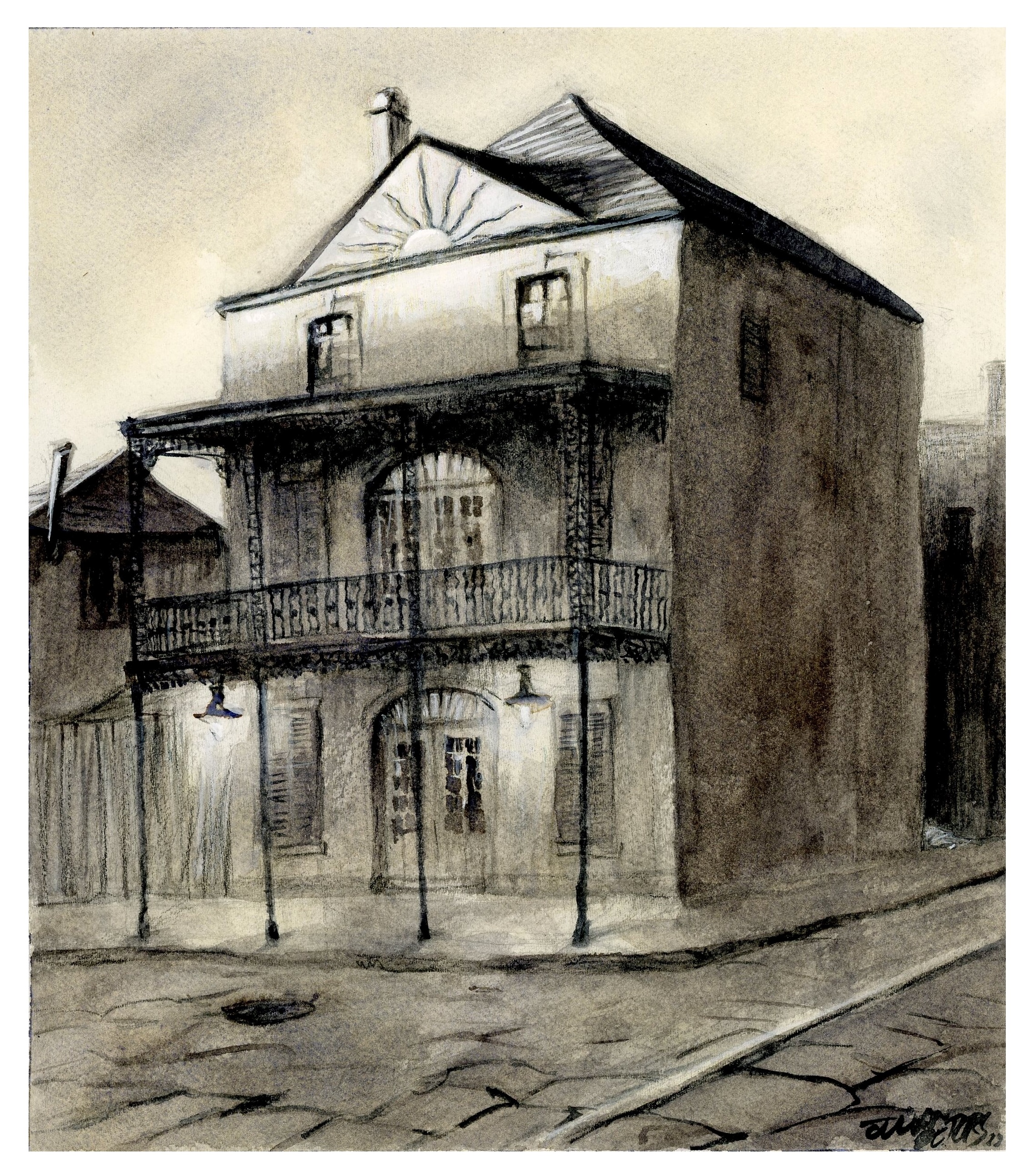
In what has become a delightful seasonal tradition, once again this year I have designed the holiday card for the Montreal financial services firm ASSURART. The watercolour depicts a house on Rue Rielle, in the Verdun neighbourhood of Montreal.
“There is a house in New Orleans, they call The Rising Sun, and it’s been the ruin of many a poor girl, and me, oh God, I’m one.”
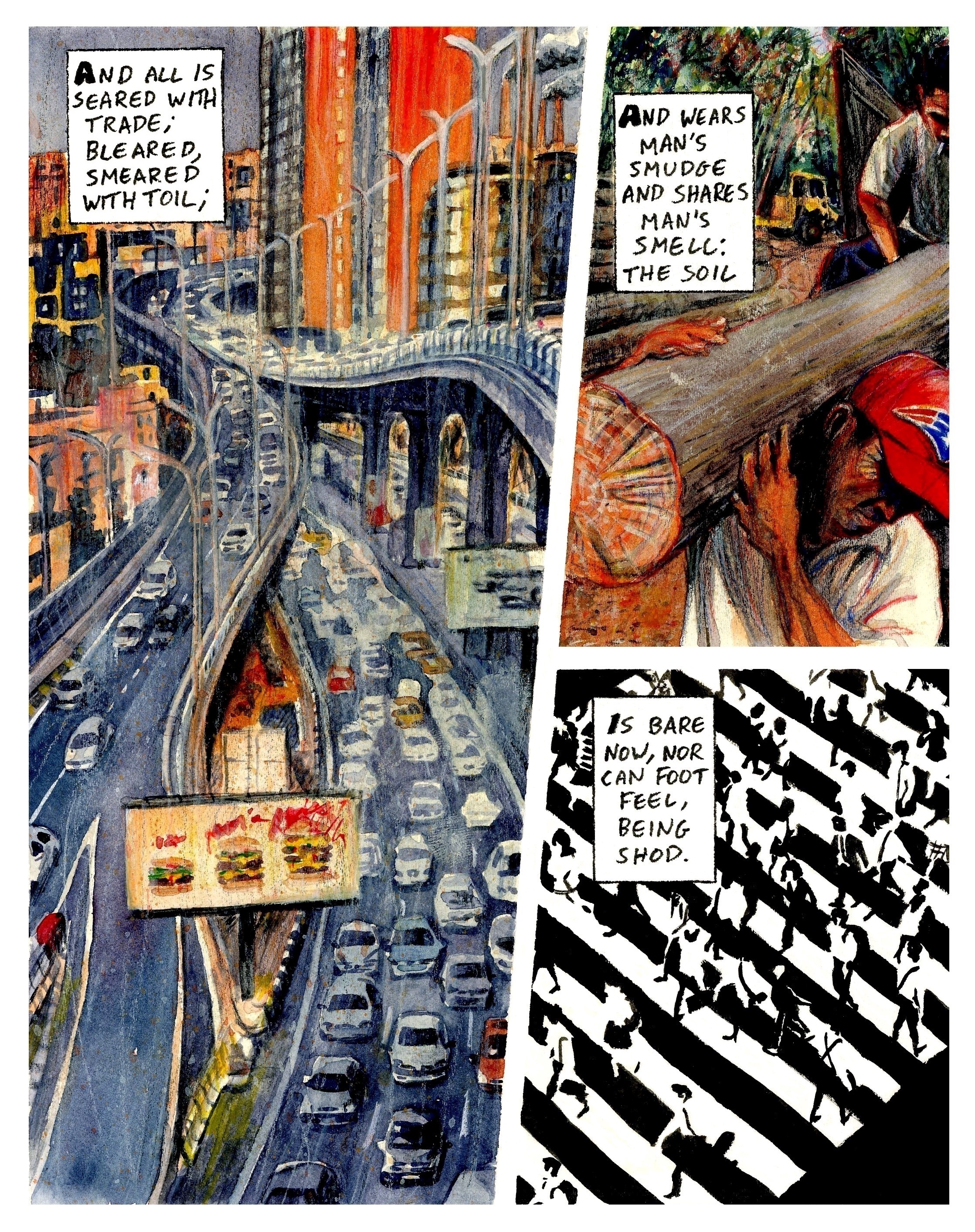
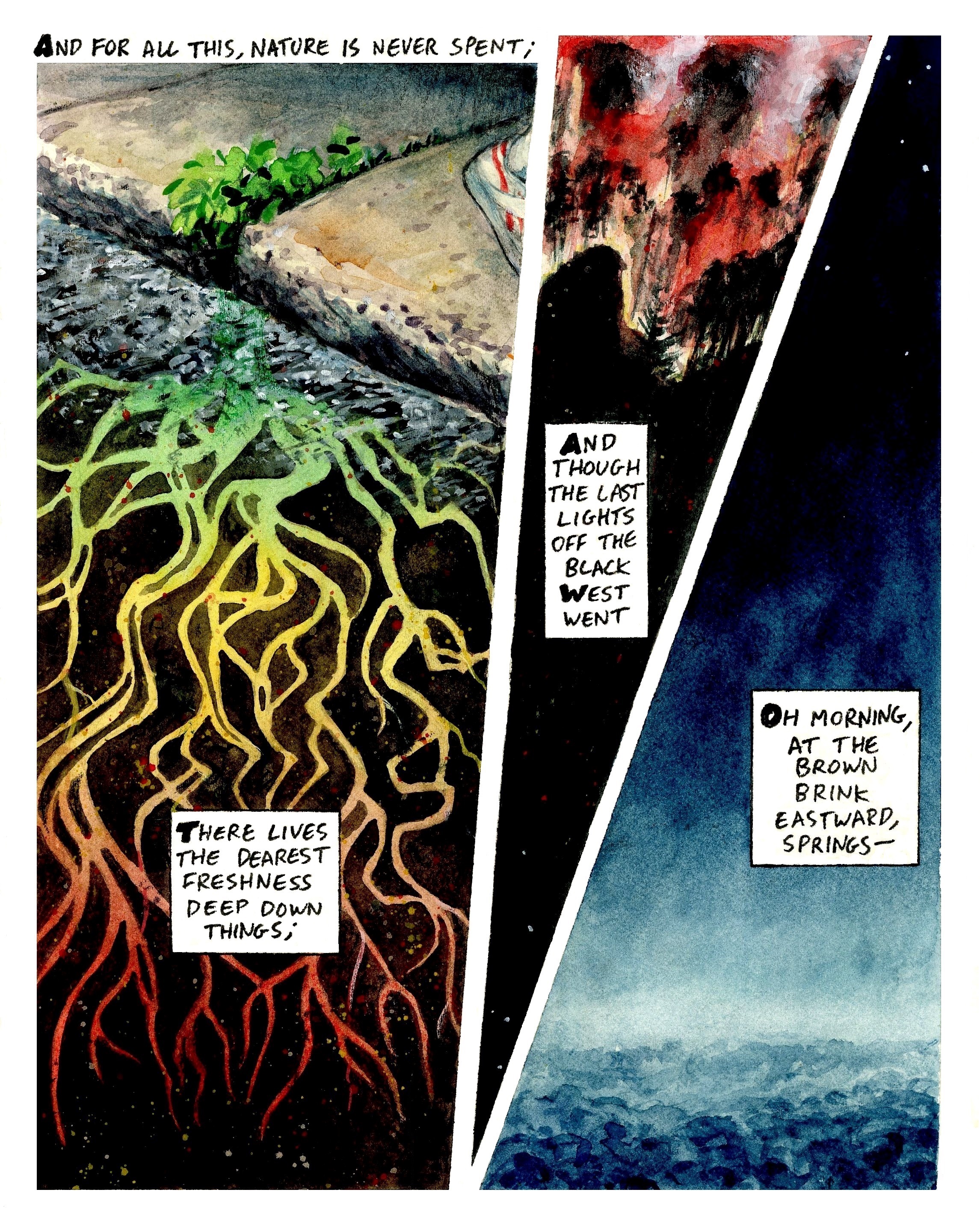
My comics adaptation of “Gods Grandeur,”a sonnet by the English poet Gerard Manley Hopkins (1844-1889).
Considered one of the most influential poets of the 19th century, Hopkins converted to Catholicism in 1866 and eventually became a Jesuit priest. This comic was originally commissioned by the Jesuit Conference of Canada and the United States to mark the poet’s 179th birthday on July 28 of this year.

A beautiful video animation by Jim Avis inspired by one of my “Views of an Imaginary City”:
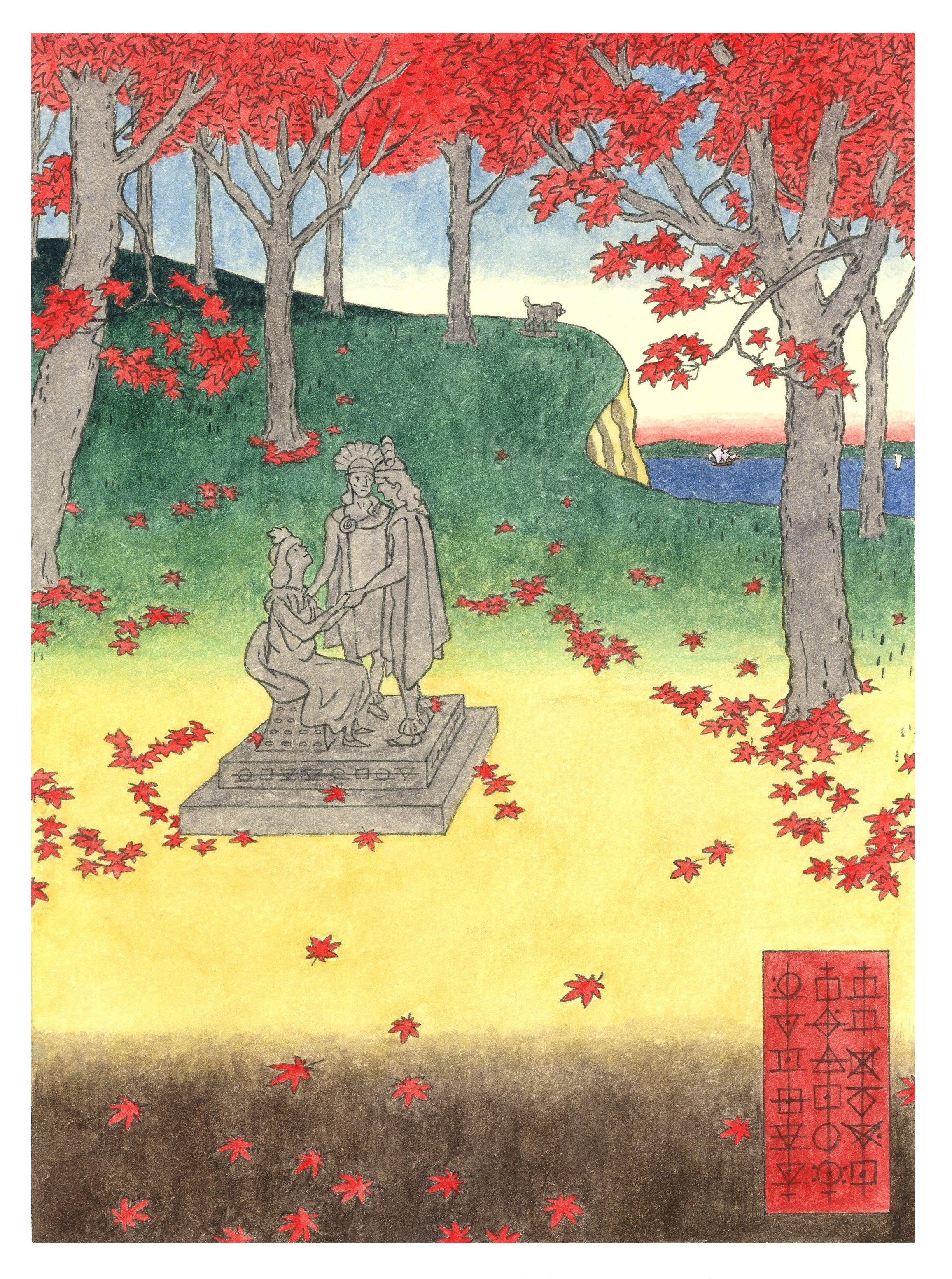
The city of Okrona was the imperial capital, on and off, for more than eleven centuries (and is still sometimes regarded as the Empire’s cultural capital). On the occasion of the 150th anniversary of the transfer of the imperial seat to Sensuka, the municipal government of Okrona decided to gift the citizens of the present capital with a monumental sculpture celebrating the enduring friendship between their two cities.
The sculpture was created by the famous sculptor Dinorfi (a native-born Okronan) and depicts three allegorical figures: two standing male figures representing the cities of Okrona and Sensuka, and a seated female figure representing the Empire. The older male, who represents Okrona, has his left arm over the younger male’s (Sensuka’s) shoulder in a gesture of encouragement as the latter gathers the woman’s hands in his own. The represented meaning, then, would seem to be that of Okrona giving its blessing to the Empire’s transfer of its capital to Sensuka.
It is noteworthy, however, that the Okrona figure’s right hand is resting on the Empire figure’s shoulder. Indeed, on a close inspection he appears to be pressing into it in an almost sensual manner. Because of this, the sculpture was widely interpreted at the time as an allusion to a traditional (now rare) conjugal arrangement known as tramago. In such relationships, a woman (or man) has one live-in partner and another official partner who lives in another household, usually with another partner (who in turn has another partner living somewhere else, and so on). According to this interpretation, then, while the Empire would now be “moving in” with Sensuka, she would continue to be Okrona’s lover as well.
Continue reading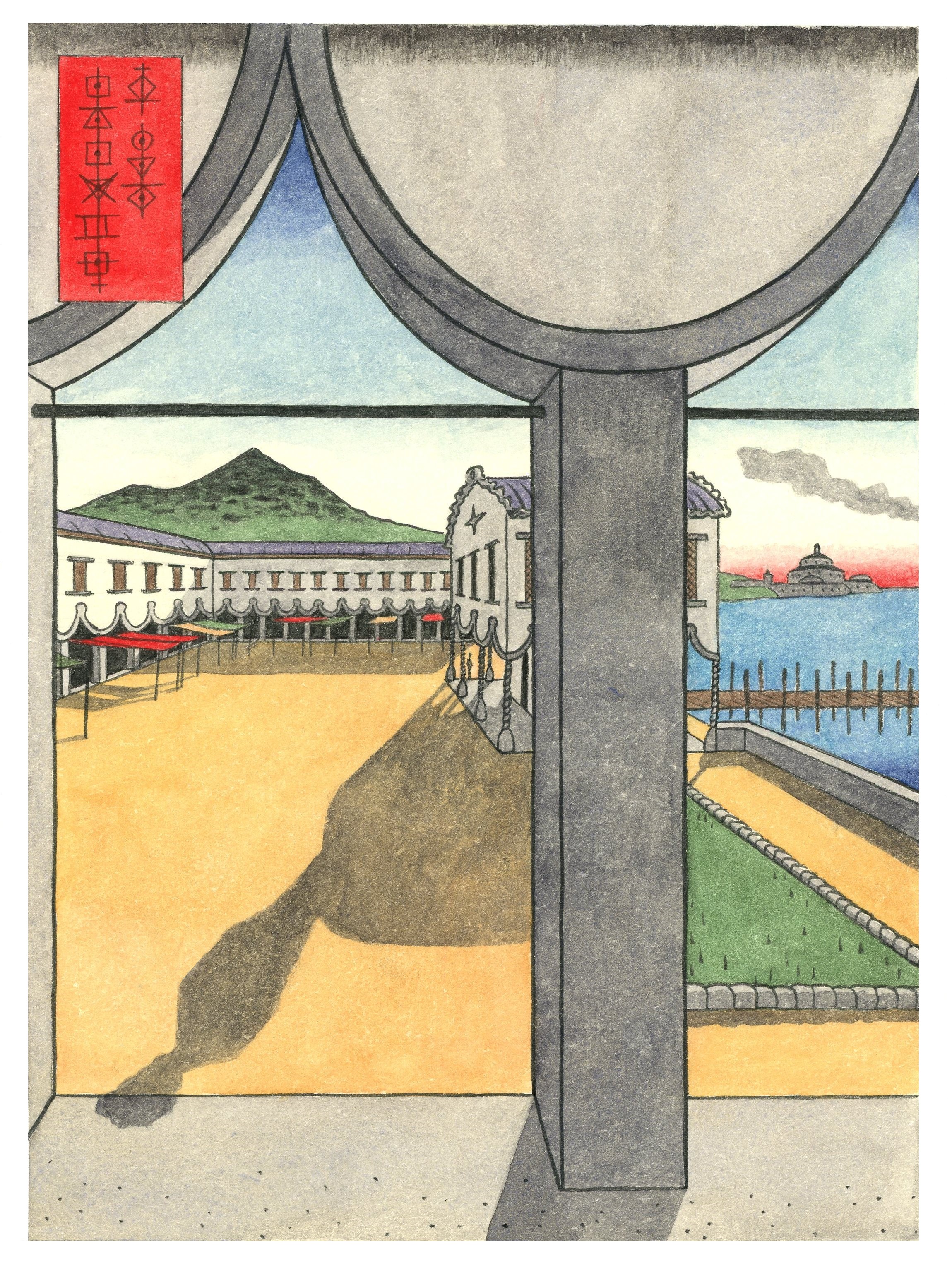
Kadukaripaza (Karipaza Square) in the Korkidèh neighbourhood is one of the most appealing spots in all the imperial capital. The square is lined on three sides with two-storey whitewashed buildings, all of which have a row of arcades running along the ground floor. Underneath these arcades are several inexpensive restaurants known as nopichi, which specialize in various forms of kovenesiko, dishes of raw fish in fermented fish sauce. Kovenesiko, a name which means “old and new,” are usually enjoyed with a glass of resinated white wine, with which the nopichi are abundantly stocked. The fourth side of the square gives out directly onto the waters of Rejoma Bay. This has led to the Karipaza being described as Sensuka’s “dining room on the sea.”
At the centre of the square is the Najiri (Empress) Embarcadero. It is so named because it was built at the behest of the empress Ofisi, the consort of Bulodi II. The structure’s somewhat frilly decorations stand in contrast with the minimalism of the surrounding buildings. It is nonetheless architecturally well-integrated with the rest of square, being also whitewashed and arcaded. From here one can take a ferry to the Island of Rateliska, with its famous pleasure gardens (See n. 22). To the right we see the trail of smoke from the ferryboat, which has just moved off the edge of the picture plane in the direction of the island.
Kadukaripaza is a favourite destination for both tourists and Sensukans. In this view, however, the artist has curiously decided to depict the square almost completely devoid of people. The long, deep shadows indicate a sunny late afternoon, and yet the tables and chairs of the outdoor terraces of the nopichi have all been taken inside, and all the window shutters are closed. Standing under the arcades of the embarcadero is the scene’s only human presence: a tiny silhouetted figure, who is nonetheless casting an enormous shadow all the way across the square, almost to the point where the viewer of the print would be standing. There is an overwhelming feeling that this person is waiting for one, that this is somehow the hour of reckoning that one has long put off. And yet, there is no fear.
In the top left-hand corner of the print we can see the massive Rozusu sea fortress at the end of Korkidèh Point. It is possible that the artist’s decision to depict a deserted square is a play on the fortress’s name, which means “silence.”

