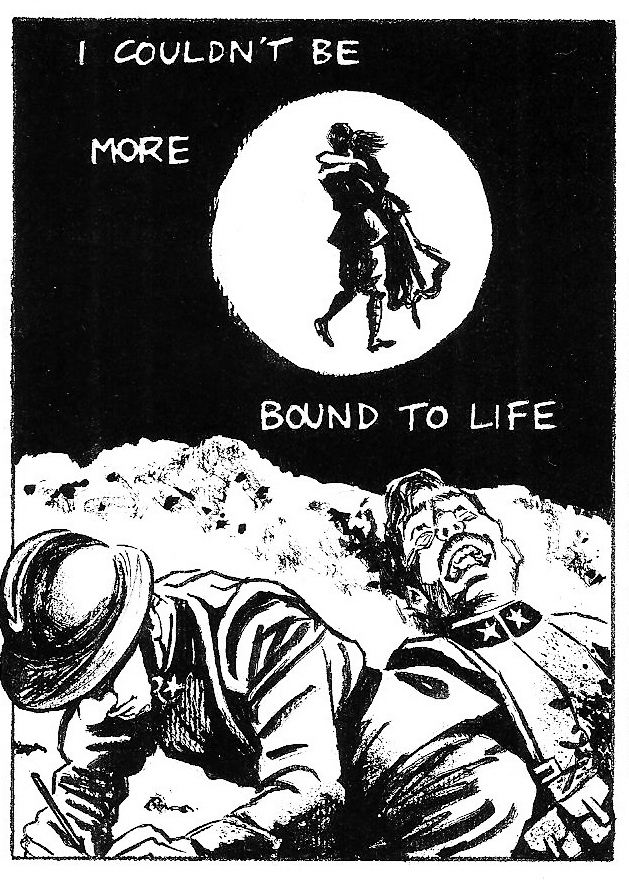
 One hundred years ago today, on the 23rd of December, 1915, Giuseppe Ungaretti wrote what would become one of the most famous Italian poems of the First World War, the very short but infinitely moving “Veglia” (“Vigil”). The 27-year-old poet had spent the previous night in a trench atop Monte San Michele (near the present-day Italian-Slovenian border), under a full moon, next to the body of a recently killed comrade. “Veglia” takes its inspiration from this grisly experience, a prolonged close encounter with death that is nevertheless transmuted by the poet into a tenacious celebration of life.
As a result of my creation of a comics adaptation of an English translation of “Veglia” by Marco Sonzogni and Ross Woods of the New Zealand Centre for Literary Translation, I was recently contacted by Mario Colombo, a native of Borsano (Busto Arsizio) in Northern Italy, who, after much in-depth investigation, believes he has discovered the identity of the dead soldier next to whom Ungaretti held his macabre vigil. As Colombo demonstrates in the article below, the soldier was almost certainly Simeone Silci, a 33-year-old man from Borsano who was drafted into the 19th Infantry Regiment, into which Private Ungaretti had enlisted as a volunteer. A foundling in the Brefotrofio (foundling institute) in Milan, Silci was adopted by the family of Giovanni Puricelli, a weaver in Borsano. At the age of 23 he married Adele Caprioli, and left three children behind at the moment of his death, which probably occurred in the early evening of December 22, 1915, while on a patrol mission.
For those of you who read Italian, I have posted Mario Colombo’s moving and exhaustively researched article below:
(To see my comics adaptation of Veglia, and other WWI poems by Ungaretti, both in the original Italian and in English translations by Sonzogni and Woods, click here: https://julianpeterscomics.com/veglia-by-giuseppe-ungaretti/)
“Veglia” di Ungaretti. Identificato il compagno morto?
di Mario Colombo
Borsano, che oggi è frazione di Busto Arsizio, durante la Grande Guerra era un piccolo comune con meno di duemila abitanti. Nel corso della guerra furono chiamati alle armi 286 suoi cittadini delle leve dal 1876 al 1900 e 34 di loro persero la vita[1]. Il primo di questi fu Pietro Colombo, venticinquenne morto il 2 dicembre 1915 per malattia nell’ospedale da campo 230 a Langòris (ora detta Angòris) nei pressi di Cormòns[2], mentre il primo caduto “per ferite riportate in combattimento” fu Simeone Silci, la cui storia è molto speciale. Il cognome insolito e con la stessa iniziale del nome è chiaro indice della sua origine: trovatello del Brefotrofio di Milano o, come si usava dire, figlio dell’Ospedale o figlio di Santa Caterina, poiché il brefotrofio dipendeva dall’Ospedale Maggiore e si trovava nell’ex convento di Santa Caterina alla Ruota[3]. Continue reading →
 My adaptation of Edgar Allan Poe’s “Annable Lee,” appears in the latest issue of Mamut, a semi-annual Spanish-language magazine based out of Barcelona and dedicated to sci-fi, fantasy and horror culture. It’s a thrill for me to be included in Mamut, whose tastes in art literature couldn’t be more up my alley. My comic appears in the original English, but is preceded by a beautiful Spanish translation of Poe’s last completed poem by Fernando Maristany (1918).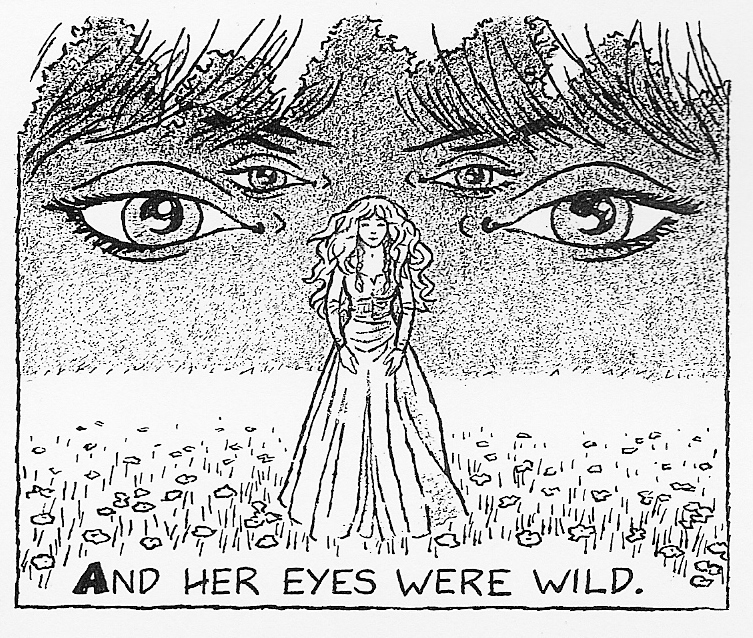




 julian peters comics