Les Loups-Garous du Québec – Werewolves of Quebec

Loup-Garou au Québec
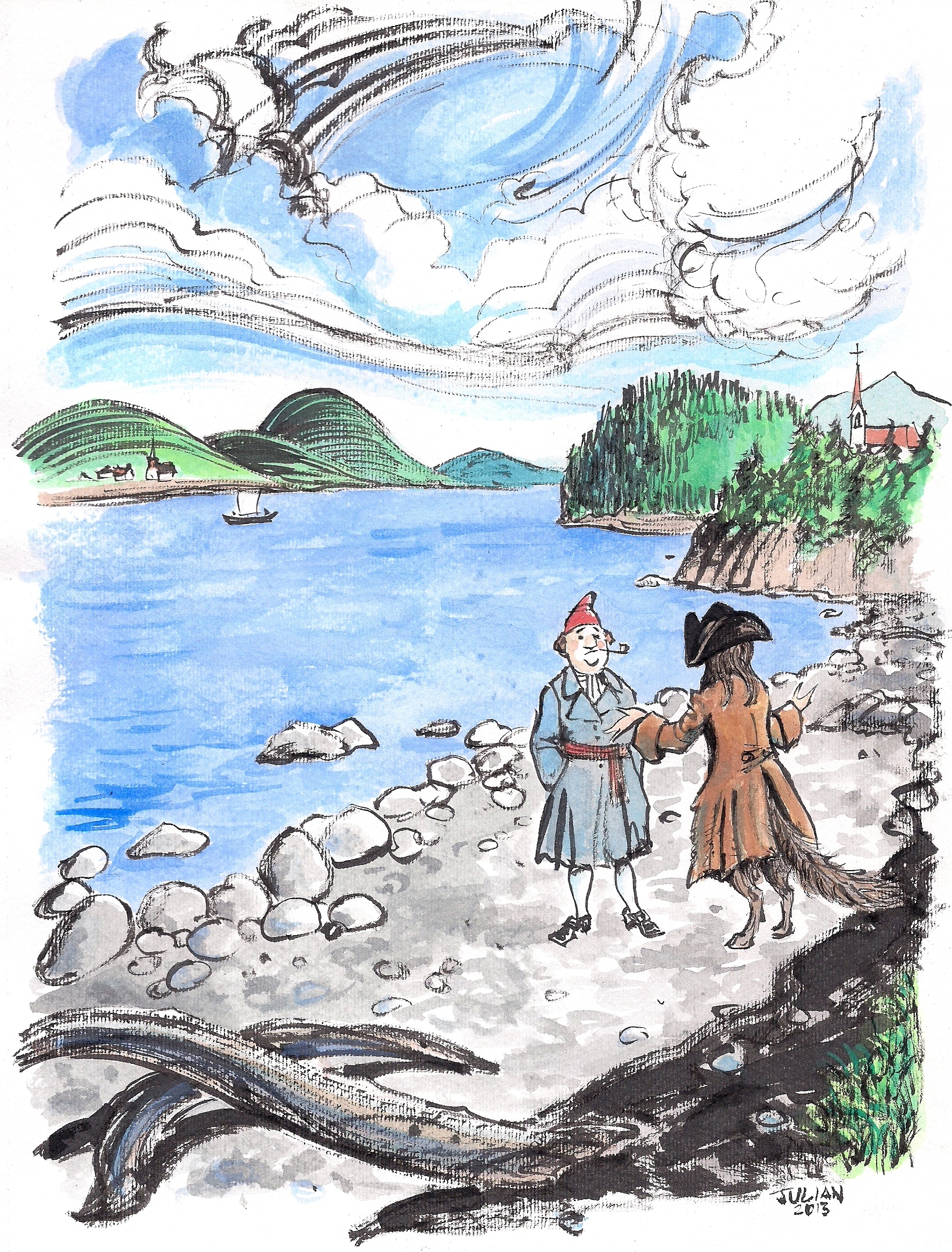
“L’on apprend de Saint-Roch, près du Cap Mauraska [Kamouraska], qu’il y a un loup-garou qui court les côtes sous la forme d’un mendiant, qui, avec le talent de persuader, et en promettant ce qu’il ne peut tenir, a celui d’obtenir ce qu’il demande. On dit que cet animal, avec le secours de ses deux pieds de derrière, arriva à Québec le 17 dernier, et qu’il en repartit le 18 suivant, dans le dessein de suivre sa mission jusqu’à Montréal. Cette bête est, dit-on, dans son espèce aussi dangereuse que celle qui parut l’année dernière dans le Gévauchan [Gévaudan], c’est pourquoi qu’on exhorte le public de s’en méfier comme d’un loup ravissant.”  –La Gazette de Québec, le 14 juillet 1776

“By accounts from St. Rock, near Cap Mouraska, we learn, that there is a Ware Wolf wandering about that Neighbourhood, in the Form of a Beggar, which, to the Talent of persuading People to believe what he himself is ignorant of, and promising what he cannot perform, adds that of obtaining what he desires. It is said that this Animal came, by the Assistance of his two hind Legs, to Quebec the 17th of last Month, and set out from hence the 18th following, with a Design to persue his Errand to Montreal.—This Beast is said to be as dangerous as that which appear’d last Year in the Country of Gevaudan; wherefore it is recommended to the Public to be as cautious of him as it would be of a ravenous Wolf.”    –The Quebec Gazette, July 14, 1776

Posted in bande dessinée, illustration, new france, nouvelle france | Tagged , , , , , | 6 Comments

Confidence!

Confidence! Confidence,’ you say,
‘Is what I look for in a man.’
The confidence within those eyes that splay
Your undressed breasts like cracked eggs in a pan.

The confidence to make you feel unwell,
The confidence to stow away his heart,
The confidence to send them all to hell,
And stand behind his shitty art.

The confidence to find it all a bore,
The confidence to be a bore at that,
The confidence to start an unjust war,
The confidence to wear a douchey hat.

The confidence to say, ‘I don’t understand you,’
And have that pass for understanding you.

Posted in Poetry | Tagged | Leave a comment

The Windhover by Gerard Manley Hopkins

windhover2A little experimentation with oil pastels. My conclusion is that they are very messy. Windhover is another name for a kestrel, a type of small falcon. Gerard Manley Hopkins, a reclusive Jesuit priest, was wildly ahead of its time in terms of form, to the point that, when his poems were first published, three decades after his death, people could scarcely believe they had been written in the Victorian period. It has been suggested that Hopkins’s poetry, ostensibly written for the greater glory of God, in fact channeled a suppressed homoerotic yearning, and to be sure, rarely has a bird been the object of so ardent a gaze as in this stunning poem. Continue reading

Posted in illustration, Poetry | Tagged , | 3 Comments

Charles Baudelaire – Evening Harmony – Harmonie du soir

Click on image to enlarge

Click on image to enlarge

My translation of a fantabulous poem by Charles Baudelaire, taken from his Les Fleurs du mal (1857). The poem is written according to an unusual structure known as a pantoum, which apparently originated in Malaysia.

The illustration of the poem is from at least twelve years ago.

Evening Harmony

Now is the time; on their stems gently wheeling,
The flowers, like censers, dissolve in the air,
Embalming the evening with perfume and prayer;
Desolate waltzes and languorous reeling! Continue reading

Posted in illustration, juvenilia, Poetry translation | Tagged , , , , | 1 Comment

“A Lesson in Poetry” – An Exercise in Deliberately Self-Important Fiction

rpat3

Jack stared broodingly out the window at the falling snow, and as he did so, he reflected that he himself was like that snow, ethereal and pure, fallen down to earth only to be trampled underfoot by unfeeling, indifferent passersby, ground down into the philistine muck and cast aside in the ditch by people whose only concern was to get to work on time, or sucked up and spat out by lascivious snowblowers.

Why in all hell had he come back to this frosty, winter-desolate city? Only a week ago, he had been in New Orleans, where he had been hanging out for the last couple of months, performing spoken word poetry in sweaty, smoke-filled jazz joints, supplementing his meagre earnings by turning tricks for drunken closeted frat boys in Bourbon Street back alleys (Women he charged half price).

Everything had been going along well enough for a time, especially on the literary front. His dazzling poems of heart-ache and ecstasy, which he would come up with there and then, freely riffing on the madcap flow of the backing band playing improvisational jazz, had the audiences hollering with delight, his words sliding and swelling like liquid silver upon the tossing swoops and dives of the mad free-form cacophony of horns behind him.

“A watchawatchawatcha doin’
Tooooo my heart, baby,
Thumpathumpa!
Like a tweedledeedleneeeeeeeeeeeeadle
In my veins, honey
You’re like a druggadrugga
YoooooouuuuUUUUU
Giveamegiveamegiveame
A rush! A rush!
To the head, honey,
TOOOooooo the head!
Tweedledeedle!”

That was how he would lay it down, and the hopped-up ragamuffins in attendance just couldn’t get enough of it. The trouble came, however, when these jazz-mad cats, many of whom had come from the farthest reaches of the Mississippi delta just to bask in the glory of Jack’s honey-tongued incantations, began complaining that they couldn’t clearly make out all of the words over the blaring of the band. They demanded that the musicians turn it down a few notches, so as to permit a proper appreciation of every inspired metaphor and dizzying phonetic twist. At first the band had obliged, albeit grudgingly, but Jack soon became keenly aware of the resentment that his talent had, once again, brought down upon him. And so it was that, one star-filled Louisiana night, he had packed up his battered suitcase and begun hitchhiking his way up north, all the way to the Canadian border, where he had then jumped a freight train to Montreal. Continue reading

Posted in humour, montreal, Poetry | Tagged , , , | 2 Comments

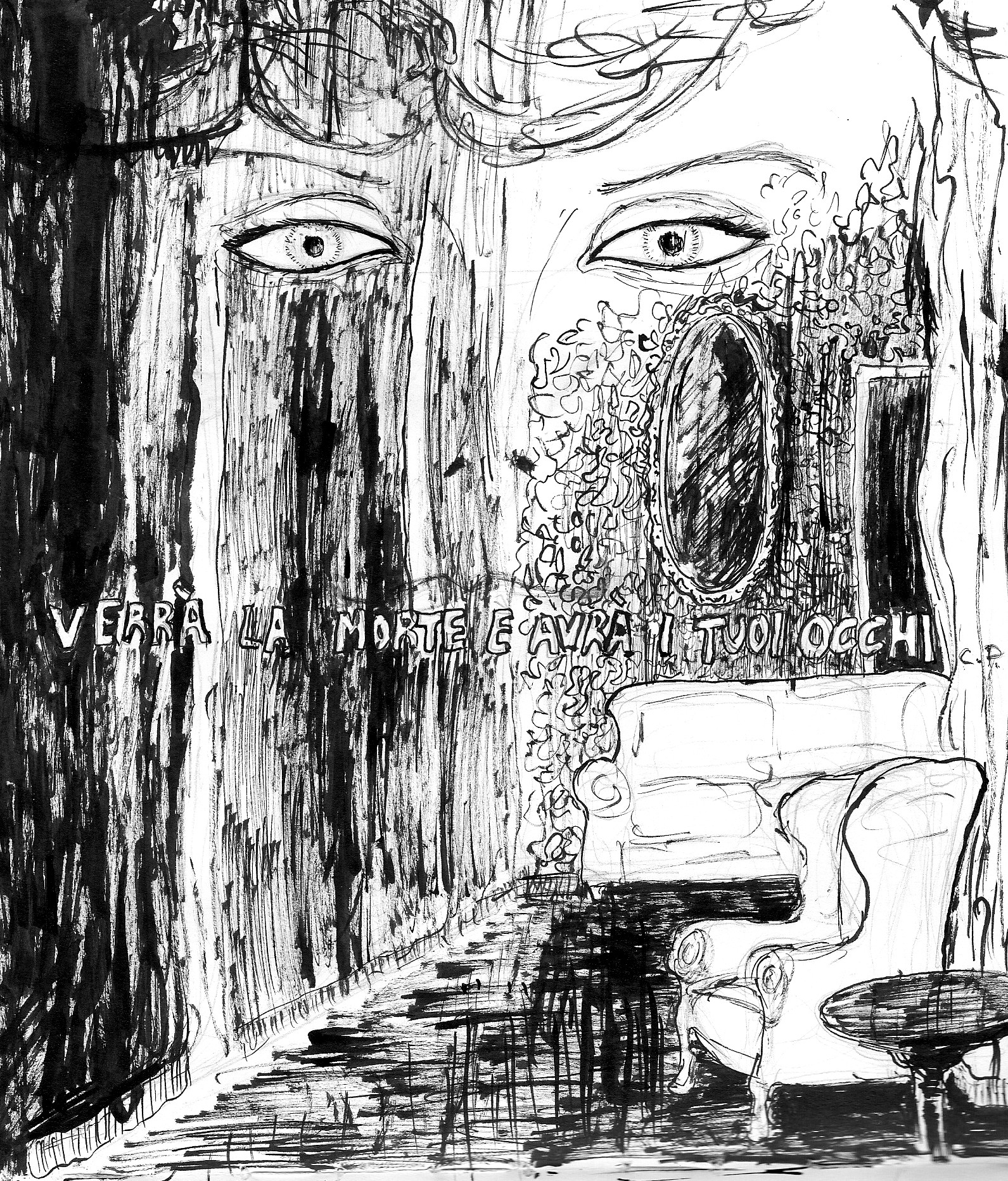
Cesare Pavese – When Death Comes, It Will Have Your Eyes – Verrà la morte e avrà i tuoi occhi

pavese

Click on image to enlarge

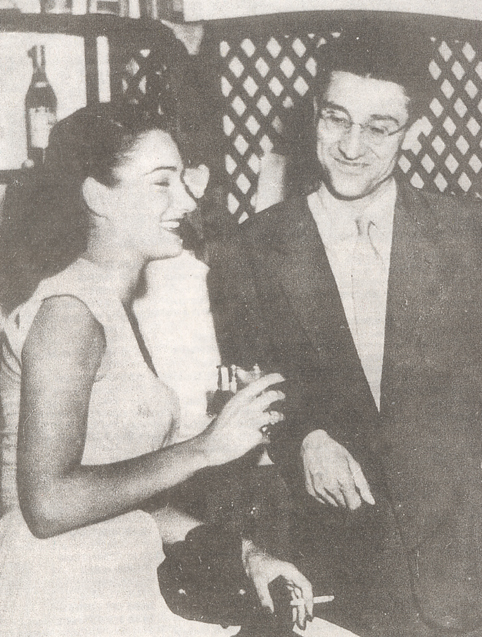
Another translation of a Cesare Pavese poem. Even without the knowledge that the poet killed himself only a few months after this was written, Verrà la morte e avrà i tuoi occhi  surely stands out as one of the most chilling and concisely haunting works in all of literature. It was found amid Pavese’s papers following his death. The poet had taken his own life at the age of 41, after having been rejected by the American actress (and former mistress of Elia Kazan) Constance Dowling, who is presumed to have inspired this poem. The title literally translates as “Death Will Come and Will Have Your Eyes,” but I have modified it in a way that I find slightly more natural-sounding in English (although it loses something of the almost medieval fatalism of the original). The drawing is one I did at least ten years ago, when I was evidently going through a bit of a Guido Crepax phase.

When Death Comes, It Will Have Your Eyes

When death comes, it will have your eyes-
This death that is always with us,
From morning till evening, sleepless,
Deaf, like an old remorse
Or some senseless bad habit. Your eyes
Will be an empty word,
A stifled cry, a silence;
The way they appear to you each morning,
When you lean into yourself, alone,
In the mirror. Sweet hope,
That day we too shall know
That you are life and you are nothingness.

For each of us, death has a face.
When death comes, it will have your eyes.
It will be like quitting some bad habit,
Like seeing a dead face
Resurface out of the mirror,
Like listening to shut lips.
We’ll go down into the vortex in silence.

-Cesare Pavese (1950)

Constance_Dowling_Pavese

Posted in illustration, juvenilia, Poetry translation | Tagged , , , , , | 7 Comments

Cesare Pavese – Meeting – Incontro

incontro2

Click on image to enlarge

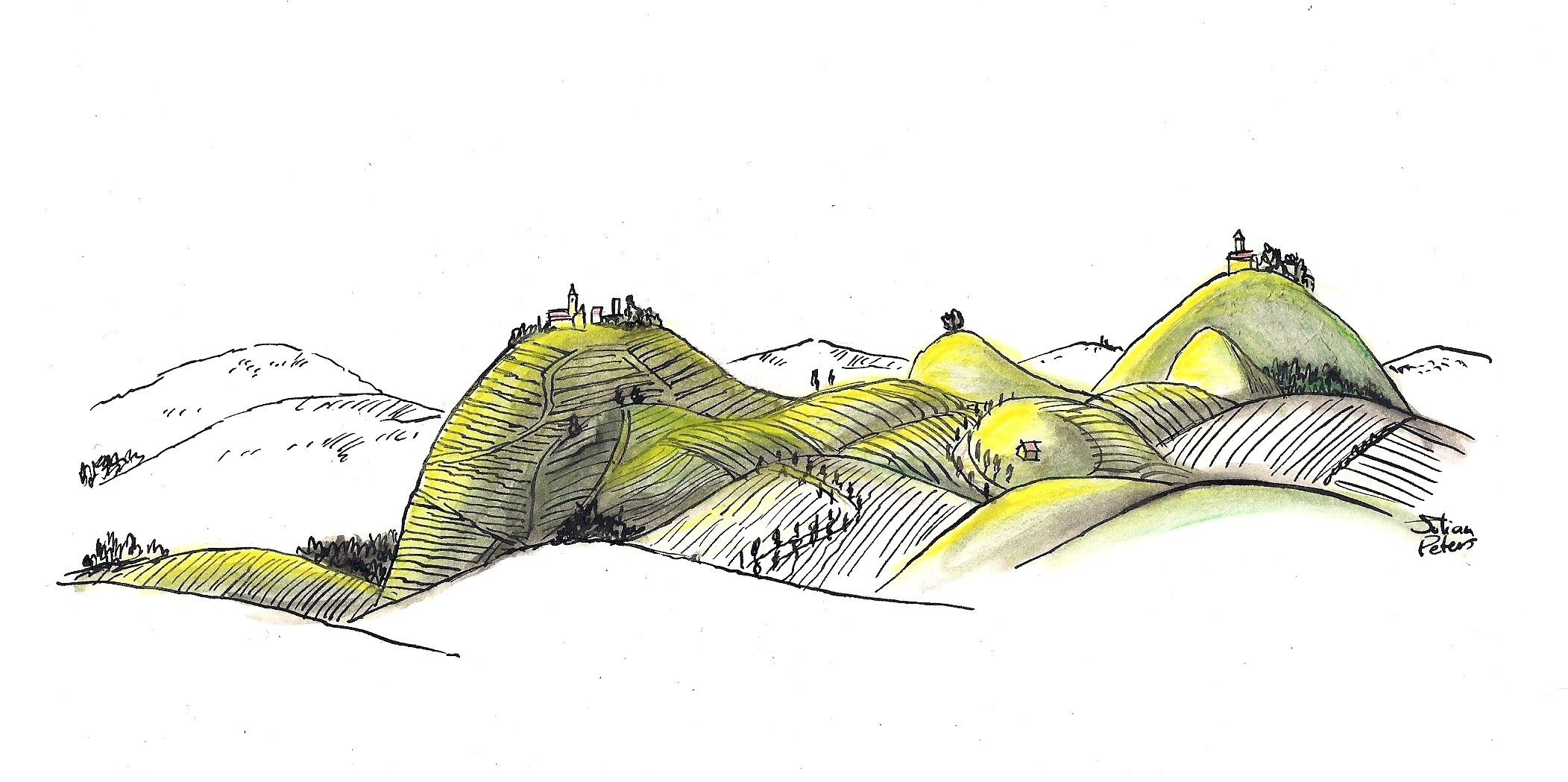
Here is my translation of  the poem “Incontro” (“Meeting”), by the great Italian novelist and poet Cesare Pavese (1908-1950). The hills referred to are those of Pavese’s native Langhe region, in Piedmont. It dawned on me as I was translating this that the sentiments expressed are essentially the same as those in the lyrics of Guns ‘N’ Roses’ “Sweet Child O’ Mine,” albeit with a touch more reflectiveness. Consider especially the opening lines of that song (a song which also inspired my unfinished graphic novella by the same title) : “She’s got a smile that it seems to me/Reminds  me of childhood memories/ When everything/ Was as fresh as the bright blue sky.” Uncanny!

Meeting

These hard hills that made my body,
And stir within it so many memories, have revealed to me the miracle
That is this woman, who doesn’t know she lives in me, and whom I can’t understand.

I met her one evening: A lighter patch
Under the ambiguous stars, in the haze of summer.
The scent of these hills was all around,
Deeper than shadows. And suddenly, a voice
Rang out, as if from the very hills, at once clear
And strident, a voice from long gone by.

Sometimes I see her, and she lives in my eyes,
Definite and immutable, like a memory.
I’ve never been able to grasp her: Her truth
Eludes me every time, and carries me far away.
Is she beautiful? I don’t know. Among women, she’s very young:
So young that, when I think of her, I am surprised by a distant memory
From a childhood spent among these hills.
She’s like the morning, her eyes hinting
At all the faraway skies of those distant mornings.
And there’s a firm purpose in her eyes: The clearest light
The dawn ever cast forth over these hills.

I’ve fashioned her from the depths of all things
That I hold dearest, and I can’t understand her.

-Cesare Pavese (1936)

Posted in illustration, Poetry translation | Tagged , , , , | 4 Comments

Archaic Smile

archaicsmile

Click on image to enlarge

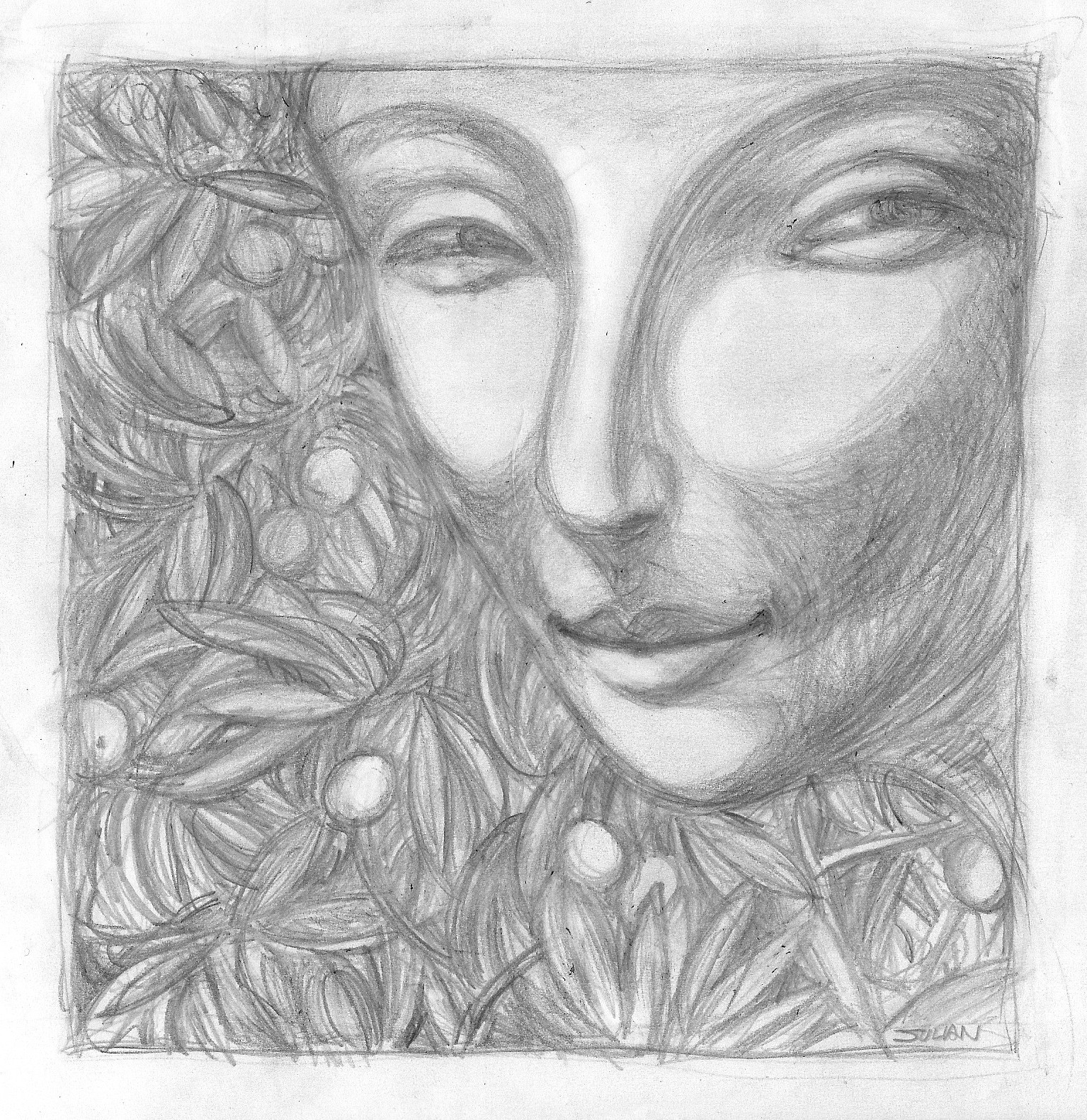
“But the power of the fragment was in the face. It was set in a triumphant smile, a smile that would have been smug if it had not been so full of the purest metaphysical good humour. The eyes were faintly oriental, long, […] also smiling […] Because a star explodes and a thousand worlds like ours die, we know this world is. That is the smile: that what might not be, is.”

-John Fowles, The Magus

Posted in illustration | Tagged , , | 2 Comments

Dave Morice’s Poetry Comics

Dave Morice, looking eccentric even by 1970s fashion standards

Dave Morice, looking eccentric even by 1970s fashion standards

The idea of adapting classic works of poetry into comics originated with the American writer, artist and educator Dave Morice. Beginning in 1978, he produced a great number of such adaptations, which were collected in his 1980 anthology Poetry Comics: A Cartooniverse of Poems (Simon & Schuster, 1980), and in several subsequent books. Partly in response to the growing popularity of poetry comics in the last couple of years, Morice has recently returned to the art form he invented with brand new issues of his Poetry Comics magazine, now published online on his website, Dave Morice’s Poetry Comics: http://www.poetrycomicsonline.com/Poetry_Comics_Story.php

Posted in Poetry Comics | Tagged , | 7 Comments

“Il Colombre” (“The Colomber”) by Dino Buzzati

ilcolombre1

Click on image to enlarge

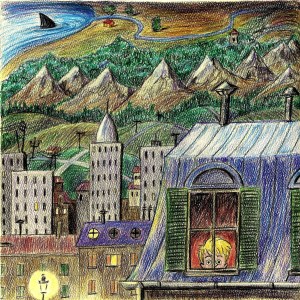
The Colomber is a short story by the Italian writer Dino Buzzati. It tells the story of Stefano Roi, a sea captain’s son who is pursued since childhood by a fearsome sea monster known as the colomber. To ensure his safety, his parents send him to study in a big city located far inland. Eventually, of course, the “lure of the abyss” proves too strong, and Stefano returns to the sea to confront his fate. This drawing illustrates the following passage, translated into English  by Lawrence Venturi:

“So the idea of that hostile creature waiting for him day and night became a secret obsession for Stefano.  And even in the distant city it cropped up to wake him with worry in the middle of the night.  He was safe, of course; hundreds of kilometers separated him from the colomber.  And yet he knew that beyond the mountains, beyond the forests and the plains, the shark was waiting for him.  He might have moved even to the most remote continent, and still the colomber would have appeared in the mirror of the nearest sea, with the inexorable obstinacy of a fatal instrument. ”   -Dino Buzzati, The Colomber

Posted in dino buzzati, illustration | Tagged , , , | Leave a comment