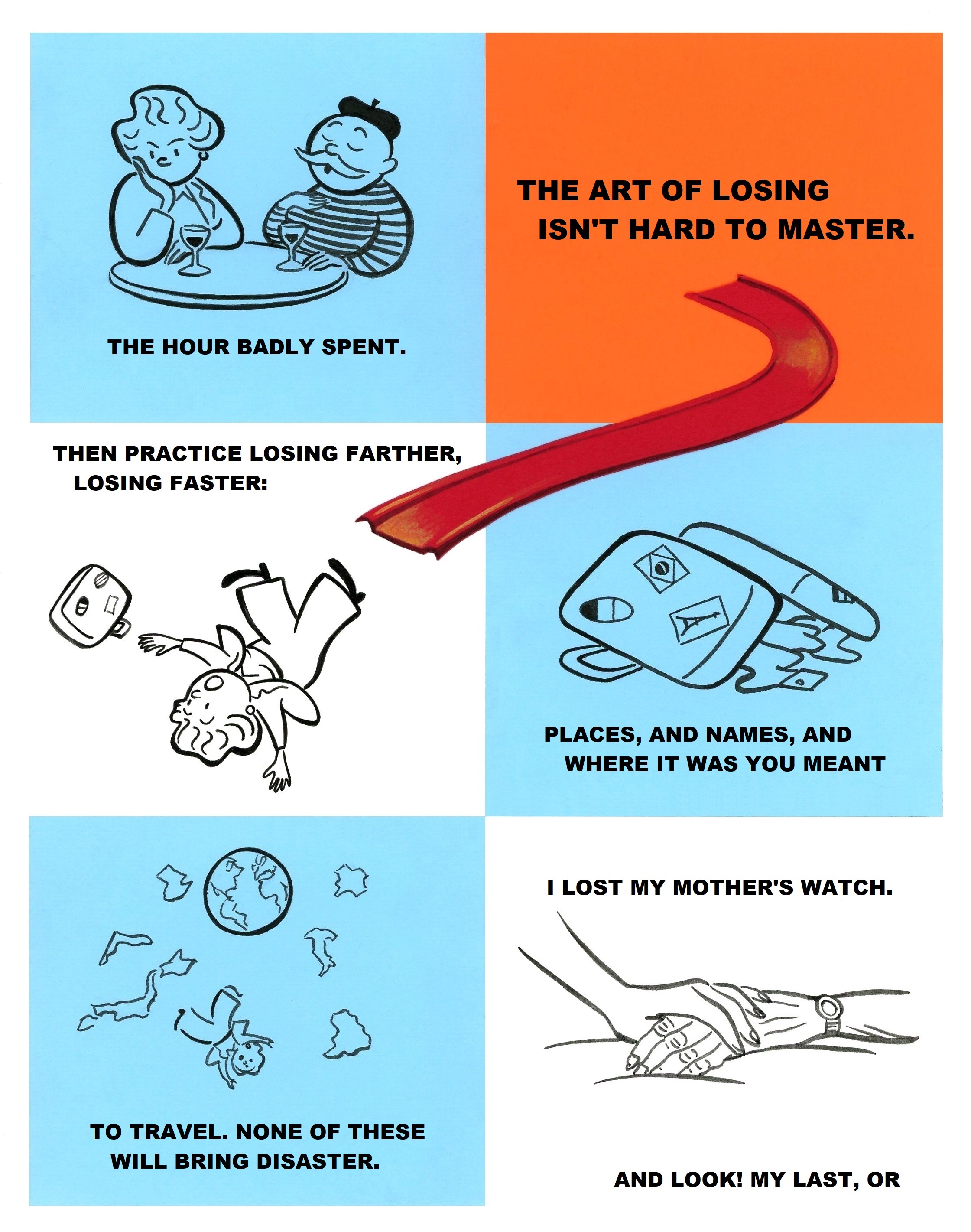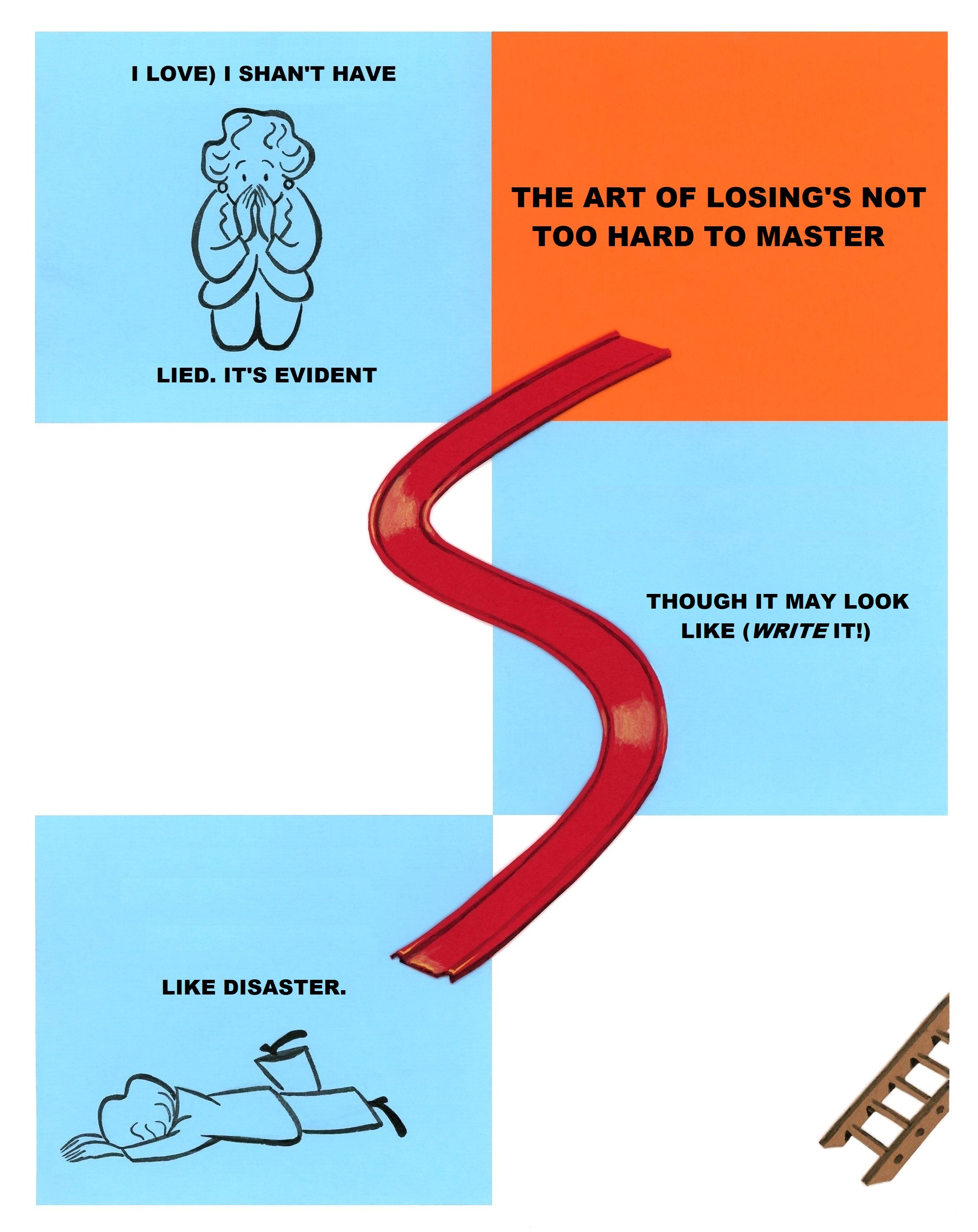
Another brilliant “vidiette” by Jim Avis, based on my comics adaptation of Elizabeth Bishop’s famous villanelle, “One Art.” The video features audio and footage from a very spirited reading of the poem by Sophia Wilcott.
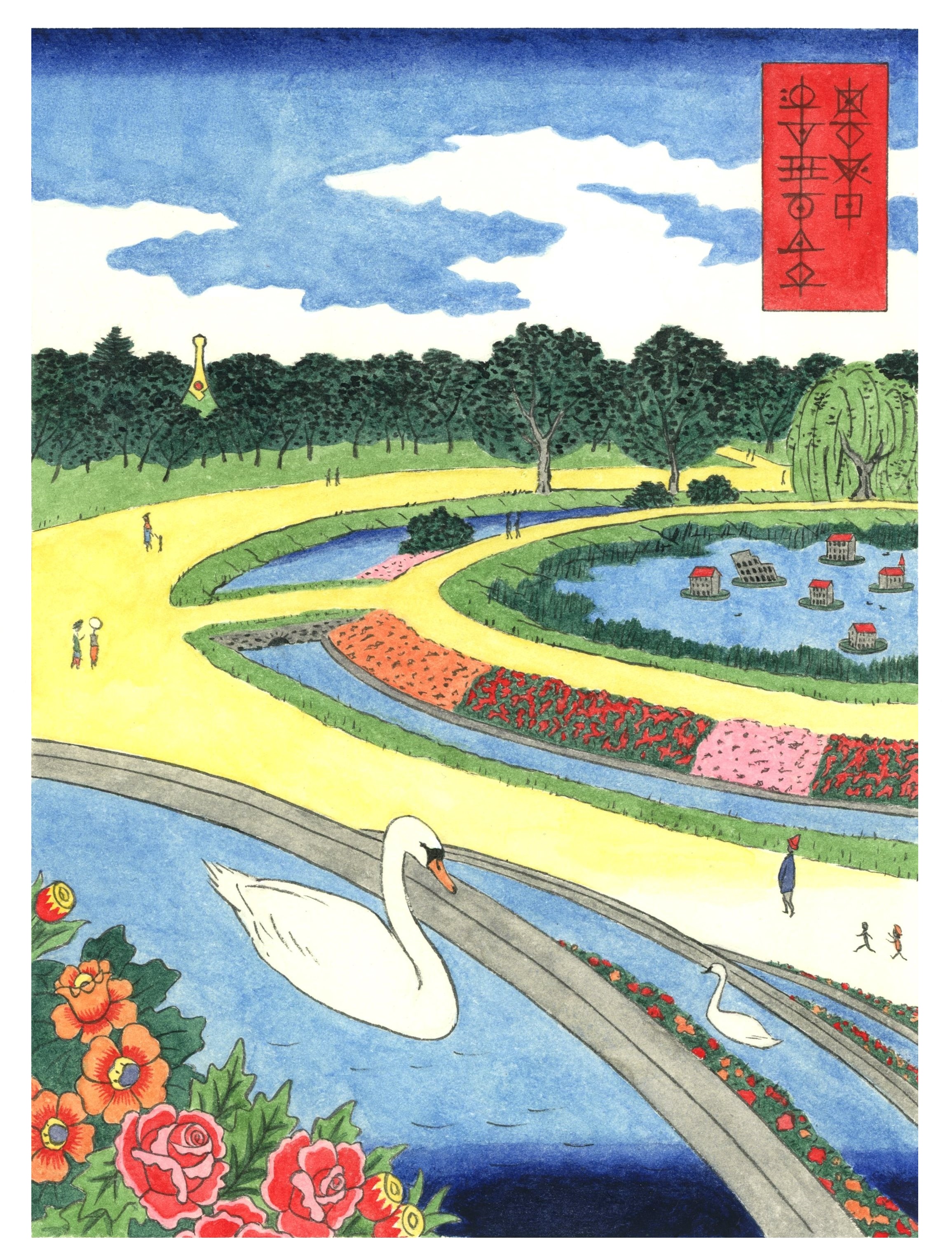
I’m honoured to have my painting “View of an Imaginary City: The Terenfi Canal” included in the Hope International Online Art Exhibition 2021 (organized by Karkhana Art Space), alongside so many amazing works of art by artists from all over the world. You can view my painting along with a selection of the works of other featured artists in this YouTube video:
A watercolour illustrating the most iconic passage in the seemingly endless and endlessly beautiful collection and analysis of memories that is Marcel Proust’s multi-volume novel, “À la Recherche du temps perdu” (“In Search of Lost Time”).
“Et tout d’un coup le souvenir m’est apparu. Ce goût c’était celui du petit morceau de madeleine que le dimanche matin à Combray […] ma tante Léonie m’offrait après l’avoir trempé dans son infusion de thé ou de tilleul. La vue de la petite madeleine ne m’avait rien rappelé avant que je n’y eusse goûté […]. Mais, quand d’un passé ancien rien ne subsiste, après la mort des êtres, après la destruction des choses, seules, plus frêles mais plus vivaces, plus immatérielles, plus persistantes, plus fidèles, l’odeur et la saveur restent encore longtemps, comme des âmes, à se rappeler, à attendre, à espérer, sur la ruine de tout le reste, à porter sans fléchir, sur leur gouttelette presque impalpable, l’édifice immense du souvenir. Continue reading
In honour of Valentine’s Day, here is my comics adaptation of the final portion of a very romantic poem by Raymond Carver, “Waiting,” The poem seems particularly appropriate on this Valentine’s Day, when we all find ourselves waiting, in one way or the other, for the return of so many of the things that give meaning to our existence–including the quest for those things.


This comic was done as a commission for someone in Italy, and the text featured on the actual physical pages is a translation of the poem into Italian (the language of love, mais oui!). I’m including that version below. The excellent translation is by Riccardo Duranti and Francesco Duranti. Continue reading
The Imperial Water Riding Club is a prestigious private club dedicated to the aristocratic sport of water riding—the riding of horses while they are swimming. The association’s palatial clubhouse sits on the shores of Golangolu (“Long Lake”), the largest of the interconnected lakes at the northern end of the city that are collectively referred to as the “four silver pendants.”
For the many homeless people who populate the parkland around Golangolu, the clubhouse offers a number of benefits. In particular, the massive wooden pier—which serves as a viewing platform during aquatic horse races—is partly built over dry land, and thus constitutes a good shelter for sleeping. This space is an especially welcome option during the sweltering summer months, as the lake waters have a pronounced cooling effect. Furthermore, the clubhouse’s architecture—which combines Sensukan and Swiss elements in a style known as “Imperial Chalet”—is characterized by widely projecting eaves, and these provide ample protection from the elements. While it is generally too risky to attempt to sleep against the walls of the main building, where one may be easily discovered by the night watchman, the outlying buildings share in this same architectural feature, and are far less guarded. Of course, if one is able to gain entry to the clubhouse barn, the warm air and soft hay render it ideal winter sleeping quarters. Continue reading
My comics adaptation of one of Elizabeth Bishop’s (1911-1979) last and most beautiful poems, “One Art,” first published in 1976. The poem is a villanelle, and there is something about the highly structured rhyme scheme of this verse form that to me always seems to give these works a bit of a game-like quality (which is not to say the emotions expressed therein can’t be very serious and powerful, as this particular poem demonstrates). This element of ordered playfulness suggested my imagining of the poem as a kind of Monopoly/Chutes and Ladders board game board.
There are very few digital elements in this comic. The drawings were inked on arrangements of pieces of differently-coloured Bristol board and the slides, ladders, and Monopoly houses are painted Bristol board cut-outs which I glued onto the page.

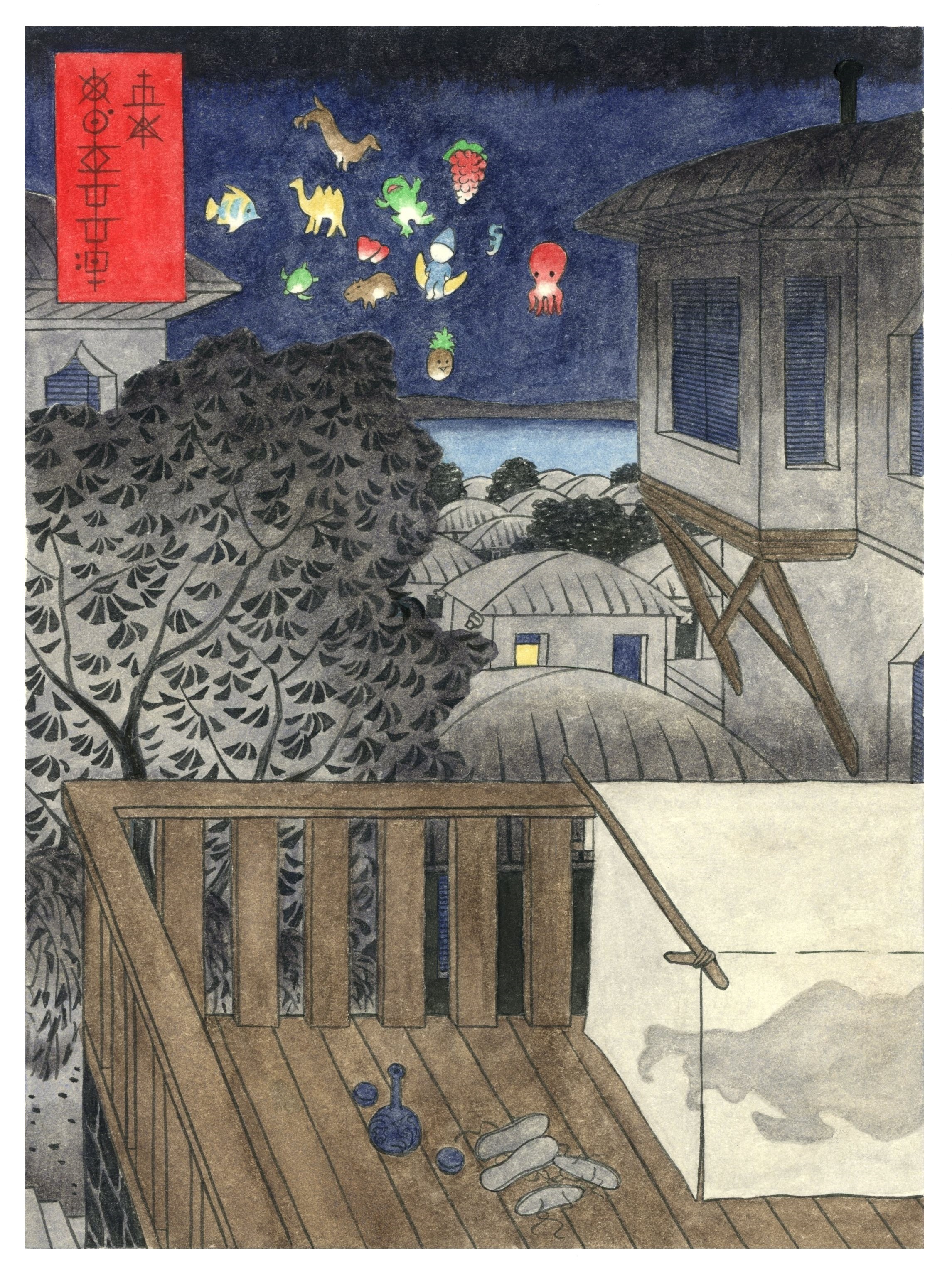
The Nachilaterenfi (“Canal of Flowers”) connects the Imperial Canal to Rejoma Bay. It is so named because, in its early days, before its surroundings became one of the most built-up areas of the capital, the banks of the canal were covered with wild flowers. Opened in the reign of the empress Nanéh, the Terenfi’s importance as a commercial artery was short-lived, supplanted by the creation of the Tizabu Canal a few decades later (See n. 32). However, because the older canal permitted merchants working in the city centre a rapid and discreet access to the area via covered boat, the neighbourhood around the Terenfi became known for its upscale houses of pleasure. The women and men offering their services in these establishments came to be known as “canal flowers.” Many Sensukans are under the belief that it is this trade that gave the Nachilaterenfi its name. With time, these brothels were joined by theatres, and then restaurants, shops of all kinds, chocolate teahouses, and so on, until the Terenfi had emerged as Sensuka’s premier entertainment district, and a go-to destination for all tourists to the imperial capital. Continue reading
Check out this awesome promo video for the MA Programme in Comics Studies at the University of East Anglia (the first English-language program of its kind in the world), which is being headed up by my dear friend Frederik Byrn Kohlert. The video features the imagery from the mini-comic I created last year to promote the new program.
In honour of today’s inauguration of Joe Biden as the 46th President of the United States, here is a video put together by Jim Avis pairing my comics adaptation of Robert Hayden’s poem “Those Winter Sundays” with a more-than-competent reading by ol’ Joe himself. Say what you will about Biden, it is impossible to even imagine his predecessor reading this or any poem with even an ounce of human feeling. This difference in itself seems like grounds for optimism at a time when we will all take what we can get of it.
The original comics adaptation, along with 23 others, can be found in my new book, Poems to See By: A Comic Artist Interprets Great Poetry (Plough Publishing, 2020).