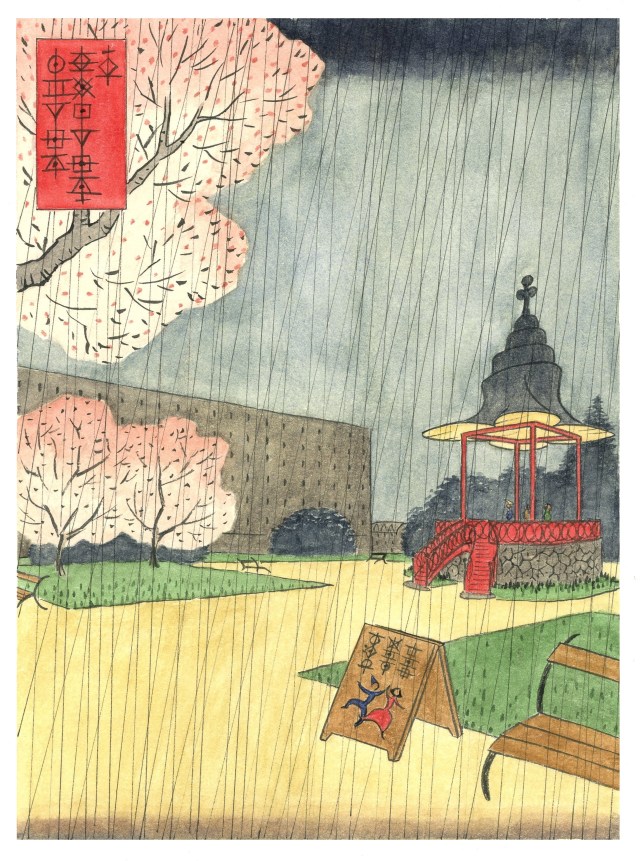
Sensuka, to be sure, is a place of endless fascination and delight. It can also, however, be a singularly heartless place. When one enters Sensuka Harbour and first looks out upon the colonnaded wharves and polychrome marble facades rising from the emerald waters, and behind them the glorious tangle of towers, domes, palaces and gardens, spreading out every which way as far as the eye can see, the effect can be intoxicating. The city’s iconic skyline seems gilded with the promise of extravagant pleasures: pastel boxes being tied with ribbon in the luxury boutiques, seductive glances across the glittering theatre foyers, bowing waiters in the famous restaurants, twinkling fountains in the innermost courtyards, rooftop parties with the bright young things sourced from all four corners of the empire.
In truth, however, these pleasures are reserved only for a privileged few. The dazzling dream of the place makes one liable to forget that, somewhere beneath that endless sea of rooftops, an evicted family is having its last belongings tossed out onto the street, that in an airless room, ragged children stand hunched together over a silk-spinning machine, that in a basement of the Imperial Palace, a knife is being sharpened against a whetstone before the terrified eyes of a man about to be “processed” into a eunuch for service in the emperor’s court. There is a definite undercurrent of cruelty running through the city, the natural consequence, perhaps, of its position at the confluence of so many forms of exploitation. Continue reading →






 julian peters comics