Views of an Imaginary City 15: Imperial Water Riding Club on Golangolu

The Imperial Water Riding Club is a prestigious private club dedicated to the aristocratic sport of water riding—the riding of horses while they are swimming. The association’s palatial clubhouse sits on the shores of Golangolu (“Long Lake”), the largest of the interconnected lakes at the northern end of the city that are collectively referred to as the “four silver pendants.”

For the many homeless people who populate the parkland around Golangolu, the clubhouse offers a number of benefits. In particular, the massive wooden pier—which serves as a viewing platform during aquatic horse races—is partly built over dry land, and thus constitutes a good shelter for sleeping. This space is an especially welcome option during the sweltering summer months, as the lake waters have a pronounced cooling effect. Furthermore, the clubhouse’s architecture—which combines Sensukan and Swiss elements in a style known as “Imperial Chalet”—is characterized by widely projecting eaves, and these provide ample protection from the elements. While it is generally too risky to attempt to sleep against the walls of the main building, where one may be easily discovered by the night watchman, the outlying buildings share in this same architectural feature, and are far less guarded. Of course, if one is able to gain entry to the clubhouse barn, the warm air and soft hay render it ideal winter sleeping quarters. Continue reading

Posted in illustration, Imaginary City, watercolour | Tagged , , , , , , , , , , , , , , , | Leave a comment

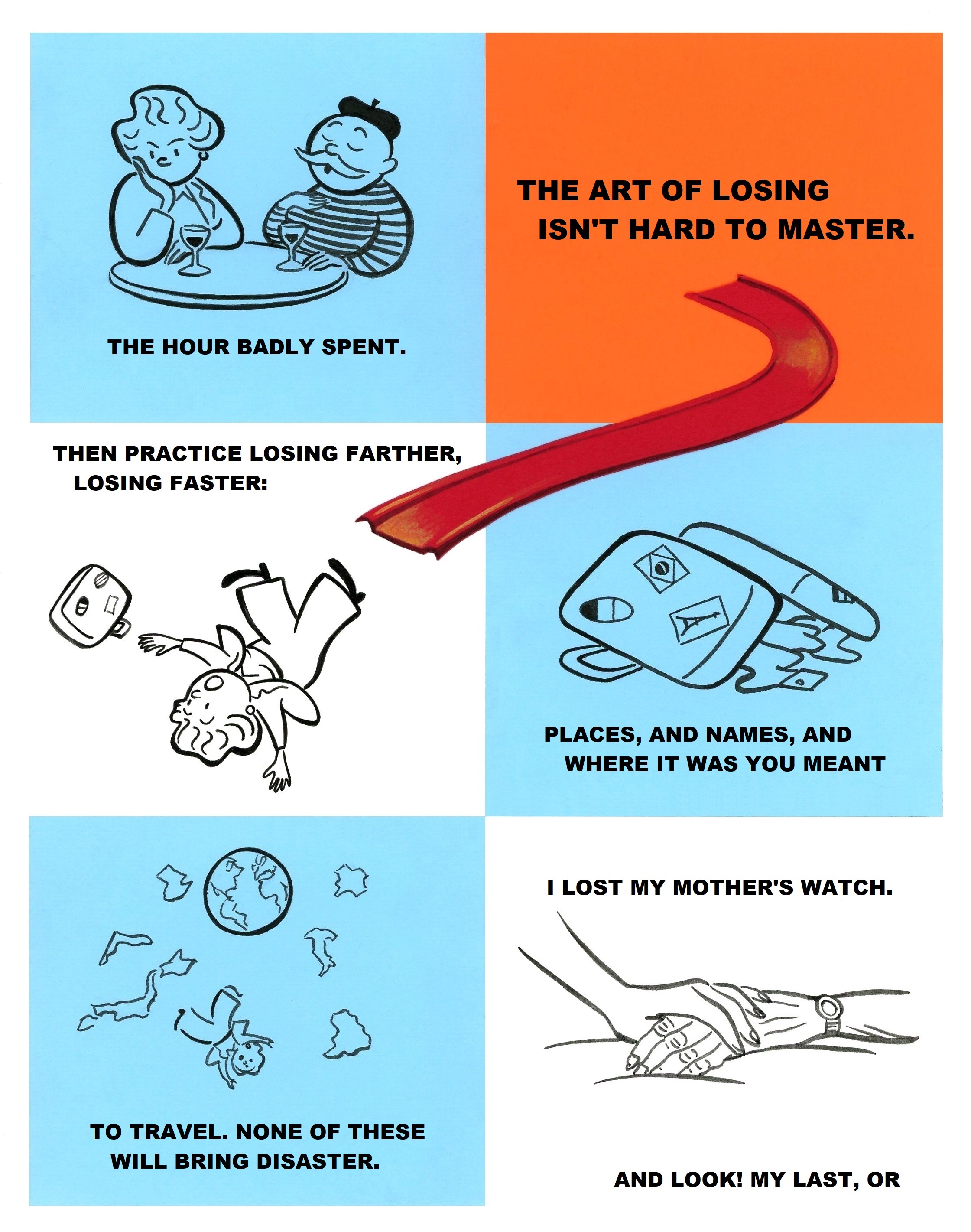
“One Art” by Elizabeth Bishop

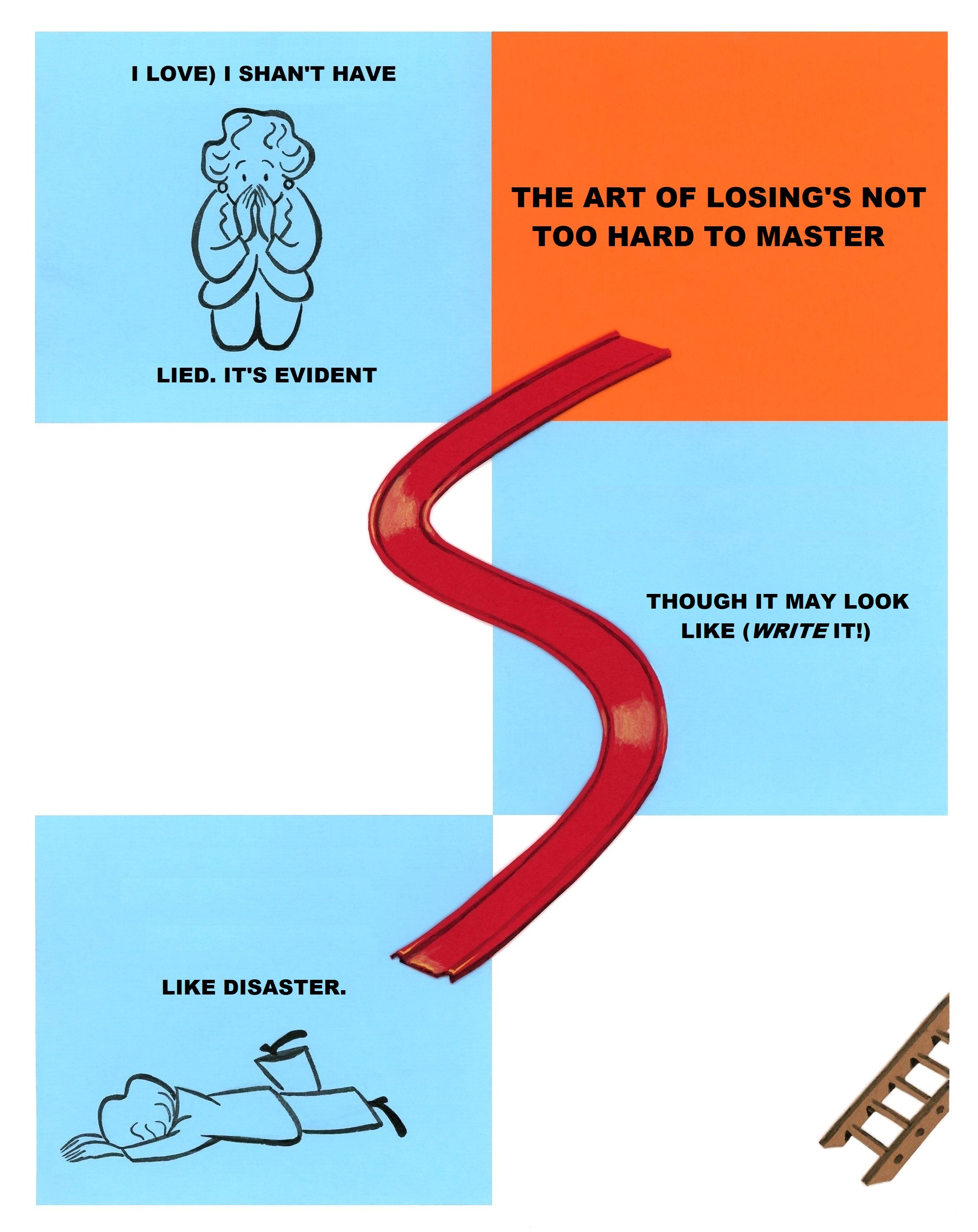
My comics adaptation of one of Elizabeth Bishop’s (1911-1979) last and most beautiful poems, “One Art,” first published in 1976. The poem is a villanelle, and there is something about the highly structured rhyme scheme of this verse form that to me always seems to give these works a bit of a game-like quality (which is not to say the emotions expressed therein can’t be very serious and powerful, as this particular poem demonstrates). This element of ordered playfulness suggested my imagining of the poem as a kind of Monopoly/Chutes and Ladders board game board.

There are very few digital elements in this comic. The drawings were inked on arrangements of pieces of differently-coloured Bristol board and the slides, ladders, and Monopoly houses are painted Bristol board cut-outs which I glued onto the page.

Posted in comics, illustration, Poetry, Poetry Comics | Tagged , , , , , , , , , | 8 Comments

Views of an Imaginary City 11: Along the Terenfi Canal


The Nachilaterenfi (“Canal of Flowers”) connects the Imperial Canal to Rejoma Bay. It is so named because, in its early days, before its surroundings became one of the most built-up areas of the capital, the banks of the canal were covered with wild flowers. Opened in the reign of the empress Nanéh, the Terenfi’s importance as a commercial artery was short-lived, supplanted by the creation of the Tizabu Canal a few decades later (See n. 32). However, because the older canal permitted merchants working in the city centre a rapid and discreet access to the area via covered boat, the neighbourhood around the Terenfi became known for its upscale houses of pleasure. The women and men offering their services in these establishments came to be known as “canal flowers.” Many Sensukans are under the belief that it is this trade that gave the Nachilaterenfi its name. With time, these brothels were joined by theatres, and then restaurants, shops of all kinds, chocolate teahouses, and so on, until the Terenfi had emerged as Sensuka’s premier entertainment district, and a go-to destination for all tourists to the imperial capital. Continue reading

Posted in illustration, Imaginary City, painting, watercolour, writing | Tagged , , , , , , , , , , , , | Leave a comment

MA in Comics Studies at The University of East Anglia promo video

Check out this awesome promo video for the MA Programme in Comics Studies at the University of East Anglia (the first English-language program of its kind in the world), which is being headed up by my dear friend Frederik Byrn Kohlert. The video features the imagery from the mini-comic I created last year to promote the new program.


Posted in comic book poetry, comics, watercolour | Tagged , , , , , , , | Leave a comment

Joe Biden reads “Those Winter Sundays” by Robert Hayden

In honour of today’s inauguration of Joe Biden as the 46th President of the United States, here is a video put together by Jim Avis pairing my comics adaptation of Robert Hayden’s poem “Those Winter Sundays” with a more-than-competent reading by ol’ Joe himself. Say what you will about Biden, it is impossible to even imagine his predecessor reading this or any poem with even an ounce of human feeling. This difference in itself seems like grounds for optimism at a time when we will all take what we can get of it.

The original comics adaptation, along with 23 others, can be found in my new book, Poems to See By: A Comic Artist Interprets Great Poetry (Plough Publishing, 2020).

Posted in comics, illustration, news, Poetry, Poetry Comics, watercolour | Tagged , , , , , , , , , , , | 2 Comments

Interview in the Journal of Graphic Novels and Comics

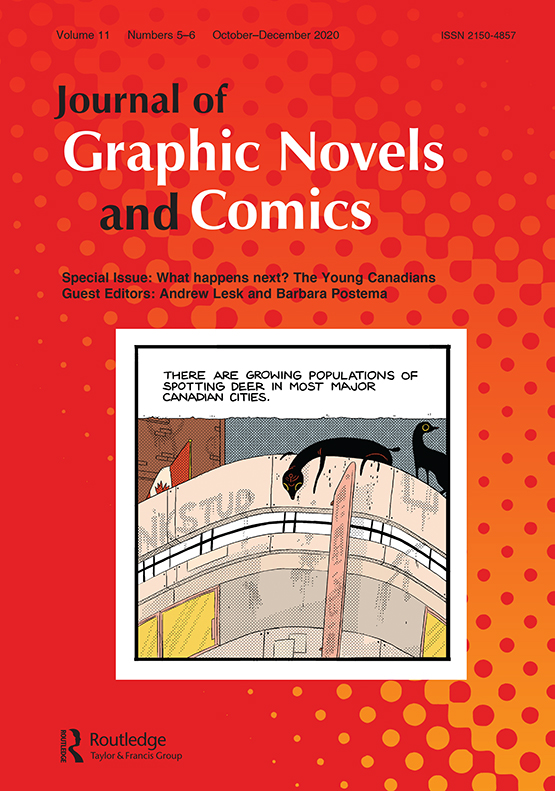
Exciting news! Rajesh Panhathodi (University of Hong Kong), Augustine George (Amrita School of Arts and Sciences, India,) and Aswin Prasanth (Amrita School of Arts and Sciences) have published an interview with me in the Journal of Graphic Novels and Comics. You can read the interview here: Full article: ‘I like to think of my comics adaptations as my own recitations … ’: in conversation with Julian Peters (tandfonline.com)

“The Journal of Graphic Novels and Comics is a peer reviewed journal covering all aspects of the graphic novel, comic strip and comic book, with the emphasis on comics in their cultural, institutional and creative contexts. Its scope is international, covering not only English language comics but also worldwide comic culture. The journal reflects interdisciplinary research in comics and aims to establish a dialogue between academics, historians, theoreticians and practitioners of comics.”

Posted in academic writing, comic book poetry, comics, news, Poetry Comics | Tagged , , , , , , , , , | Leave a comment

Views of an Imaginary City 7: Tizabu Park and Tizabu Prison


Sensuka, to be sure, is a place of endless fascination and delight. It can also, however, be a singularly heartless place. When one enters Sensuka Harbour and first looks out upon the colonnaded wharves and polychrome marble facades rising from the emerald waters, and behind them the glorious tangle of towers, domes, palaces and gardens, spreading out every which way as far as the eye can see, the effect can be intoxicating. The city’s iconic skyline seems gilded with the promise of extravagant pleasures: pastel boxes being tied with ribbon in the luxury boutiques, seductive glances across the glittering theatre foyers, bowing waiters in the famous restaurants, twinkling fountains in the innermost courtyards, rooftop parties with the bright young things sourced from all four corners of the empire.

In truth, however, these pleasures are reserved only for a privileged few. The dazzling dream of the place makes one liable to forget that, somewhere beneath that endless sea of rooftops, an evicted family is having its last belongings tossed out onto the street, that in an airless room, ragged children stand hunched together over a silk-spinning machine, that in a basement of the Imperial Palace, a knife is being sharpened against a whetstone before the terrified eyes of a man about to be “processed” into a eunuch for service in the emperor’s court. There is a definite undercurrent of cruelty running through the city, the natural consequence, perhaps, of its position at the confluence of so many forms of exploitation. Continue reading

Posted in illustration, Imaginary City, watercolour, writing | Tagged , , , , , , , , , , , , | Leave a comment

Views of an Imaginary City 6: Dastazuriki in the Little Switzerland Neighbourhood

Western traders first arrived in Sensuka soon after the city’s founding by the emperor Bulodi I as his new imperial capital. Two decades later, however, following a moral panic over the corrupting influence of Western values, religious beliefs, and food, the empress Nanèh issued an edict prohibiting all commerce with foreign nations. Nevertheless, another two decades after that, in the reign of Bulodi II, an amendment was made to this ban so as to exempt merchants from Switzerland. The young monarch held a personal soft spot for the Swiss for a curious reason: his extreme fondness for cuckoo clocks. This passion eventually led to the construction of the Great Imperial Cuckoo Clock over one of the gates of the Imperial Palace, thought to be the largest such clock ever built (See n. 27). As numerous Swiss clockmakers and clockmaking materials had in any case to be brought over to Sensuka for the purpose of completing this project, the emperor was persuaded to allow Swiss sailors to bring other goods as well. This policy has persisted, with the Swiss remaining as the sole go-between importers of all overseas products to the empire. The result is that there is now a fairly large community of Swiss residents in Sensuka. the great majority of them live in the neighbourhood known as “Little Switzerland” on the eastern side of Sensuka Harbour, facing Orepi. Continue reading

Posted in Imaginary City, watercolour | Tagged , , , , , , , , , , , , | Leave a comment

Christmas on Rue Champigny

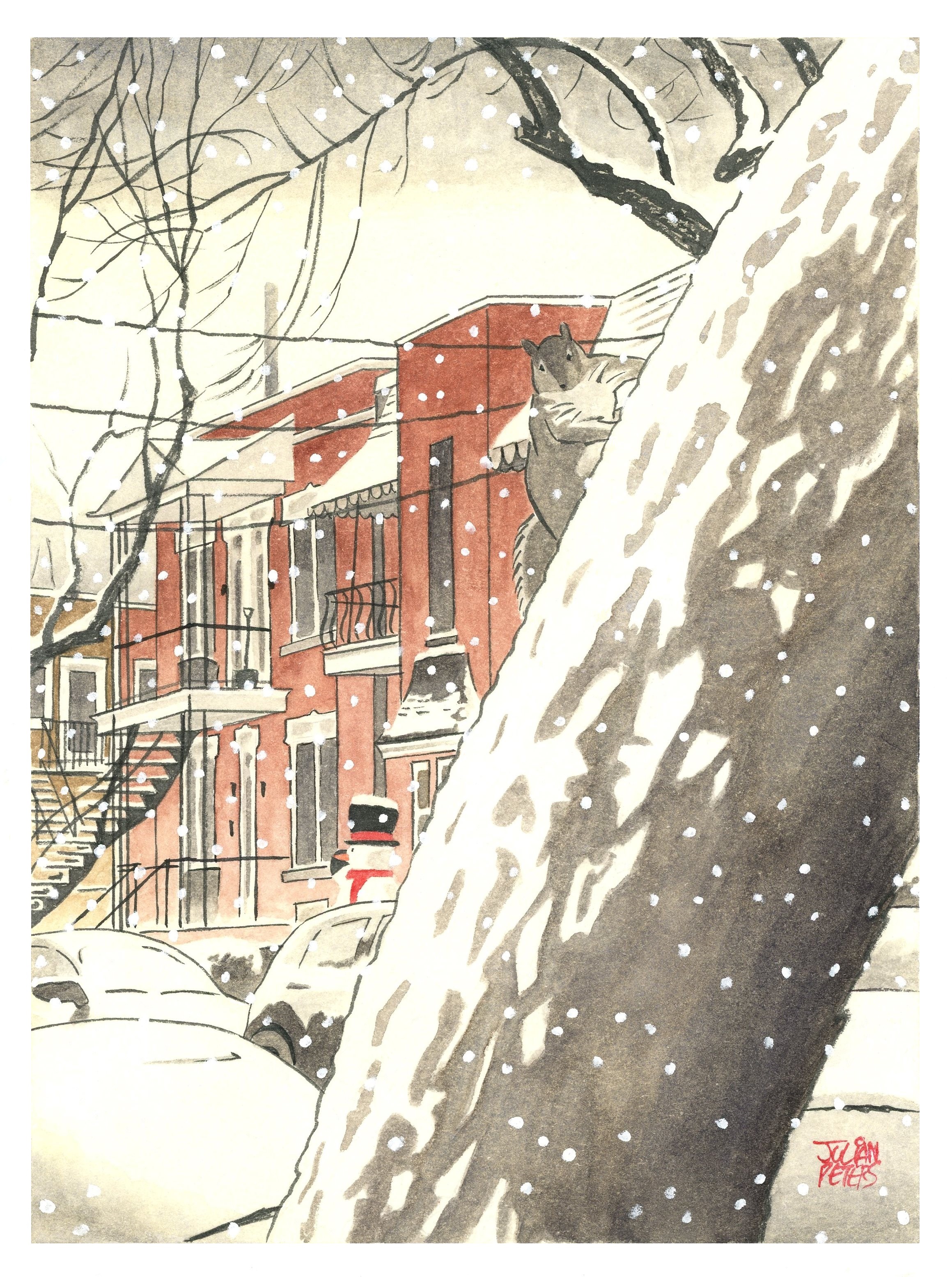
This watercolour was commissioned by the Montreal financial services firm ASSURART Inc. for their 2020 company holiday card. It was very much inspired by the magical winter scenes by the Japanese printmaking artist Hasui Kawase (1883-1957). Although the image is based on photographs that I took on rue Champigny in the neighbourhood of Côte-Saint-Paul near where I live, I had to add quite a bit of snow, as we’ve had so little of it so far this year.

Posted in illustration, montreal, watercolour | Tagged , , , , , , , , , , , , , | 4 Comments

Video of “The force that through the green fuse drives the flower” by Dylan Thomas

A video interpretation by Jim Avis of my comics adaptation of one of Dylan Thomas’s first poems. Featuring a stirring reading by the poet himself.

The original comics adaptation, along with 23 others, can be found in my new book, Poems to See By: A Comic Artist Interprets Great Poetry (Plough Publishing, 2020).

Posted in "The Love Song of J. Alfred Prufrock" by T.S. Eliot, comics, illustration, Poetry, Poetry Comics, watercolour | 2 Comments